
Understanding the Opportunity
Before the renovation of University Hall began, Purdue University undertook an in-depth study to better understand the future space needs of the College of Liberal Arts and the opportunities across the West Lafayette campus. In 2022, MSKTD & ASSOCIATES and Workshop Architects partnered with the university to evaluate thirteen campus buildings and explore how offices, classrooms, and instructional and research laboratories might be relocated, consolidated, or renewed.
The study examined several potential paths, including the future of University Hall and the possible reuse or demolition of Heavilon Hall. By examining these possibilities together, the university gained a clearer understanding of its academic needs and the role historic buildings could continue to play on campus.
From the study process, a compelling opportunity emerged. With thoughtful renovation, University Hall could become a vibrant center for the College of Liberal Arts, bringing together student services, classrooms, and collaborative spaces within one of the university’s most historic structures.
A Building Shaped by Time
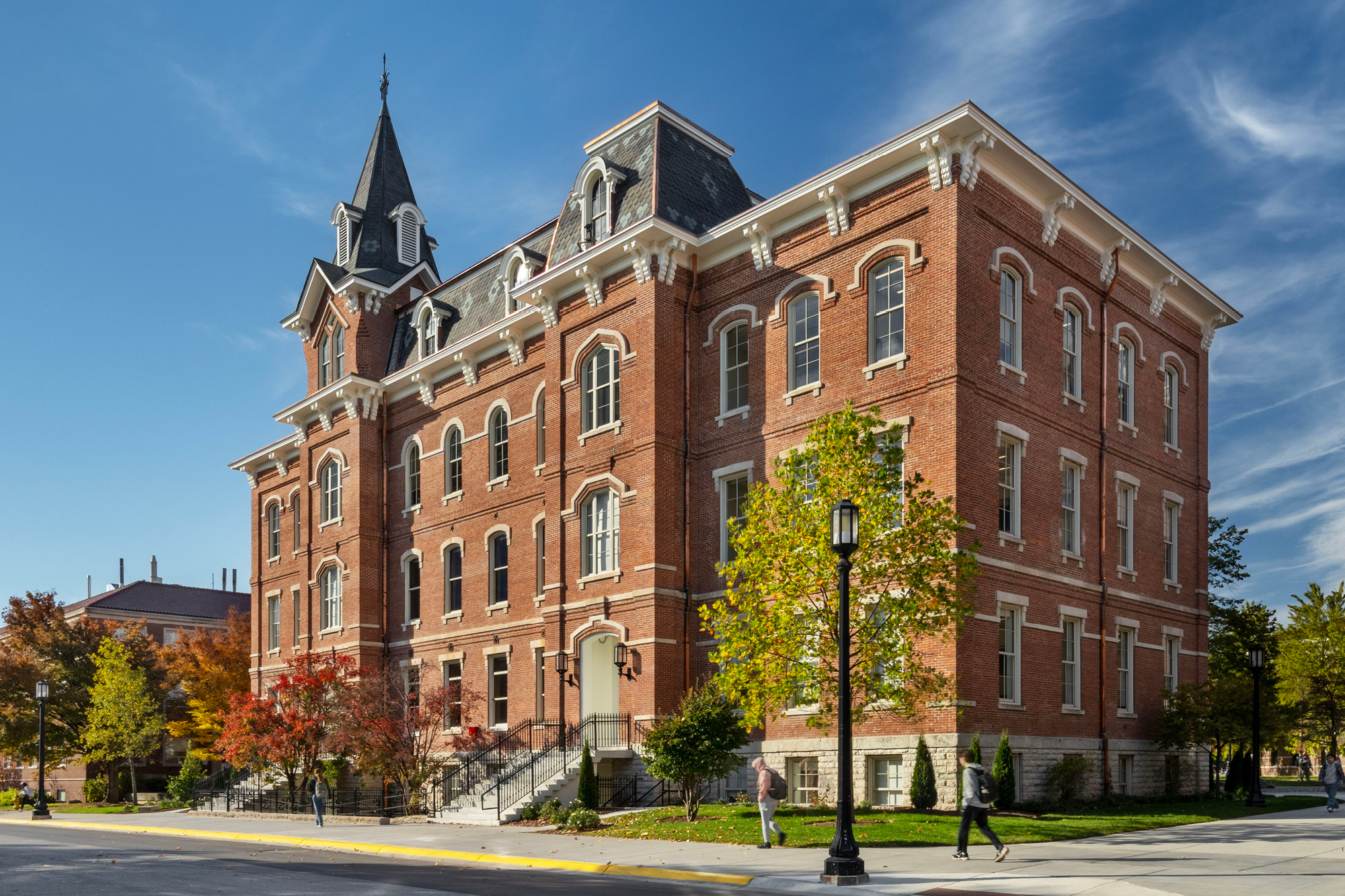
Built in about 1876, University Hall is the oldest remaining building on Purdue’s campus. Over nearly a century and a half, the building was modified to meet changing needs.
Renovations in the early twentieth century and again in the 1960s dramatically altered the interior. The original two-story central core, once filled with light and activity, was enclosed and divided into smaller rooms. Offices were inserted along the building’s windows, corridors grew darker, and ceilings were lowered throughout.
Over time, the building’s defining spatial qualities were gradually obscured. Beneath these layers of change, however, the historic structure still held the potential to be rediscovered.
Reimagining the Heart of the Building
Guided by insights from the feasibility study, the design focused on restoring the qualities that once defined the building, including light, openness, and connection.
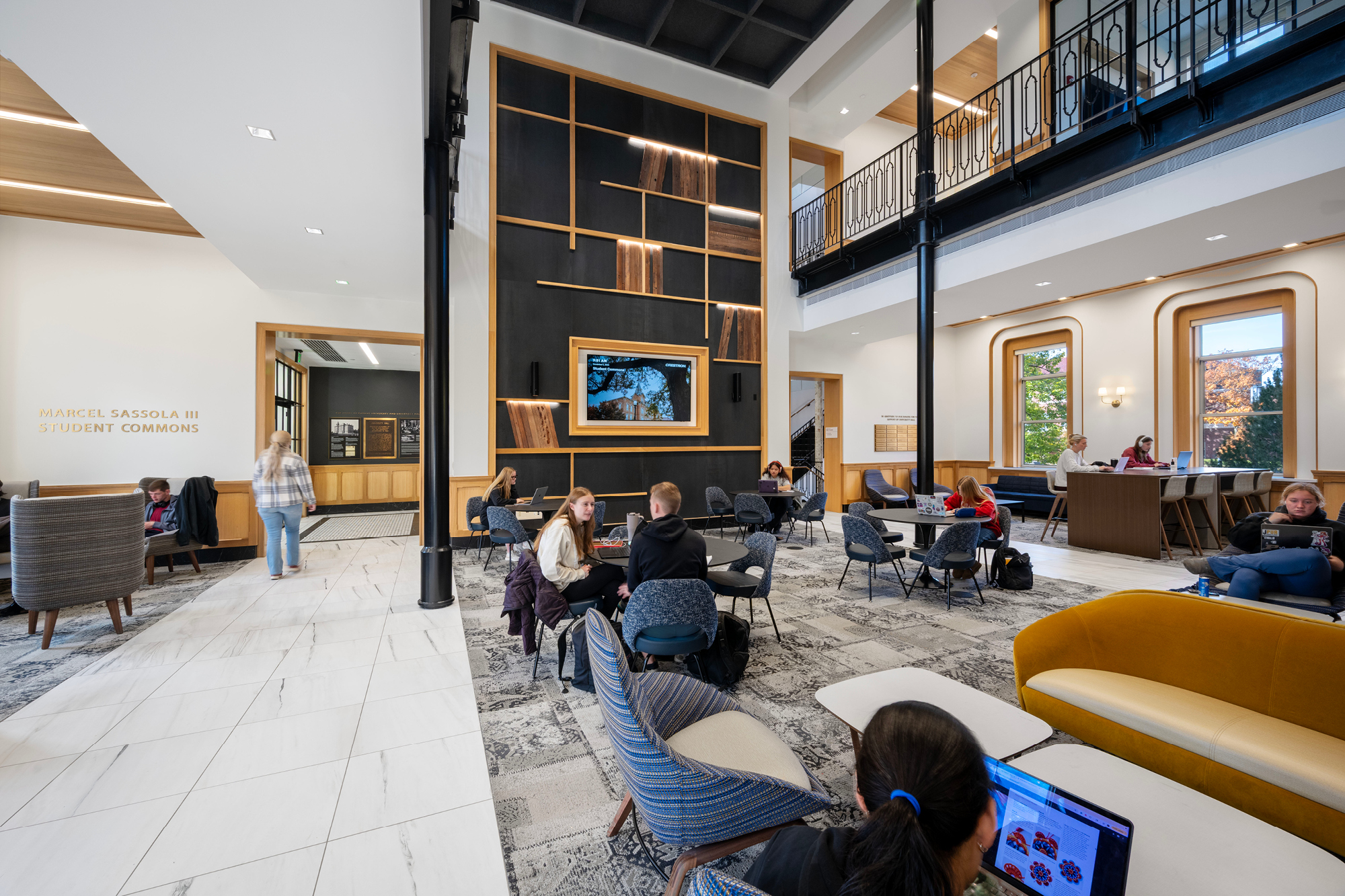
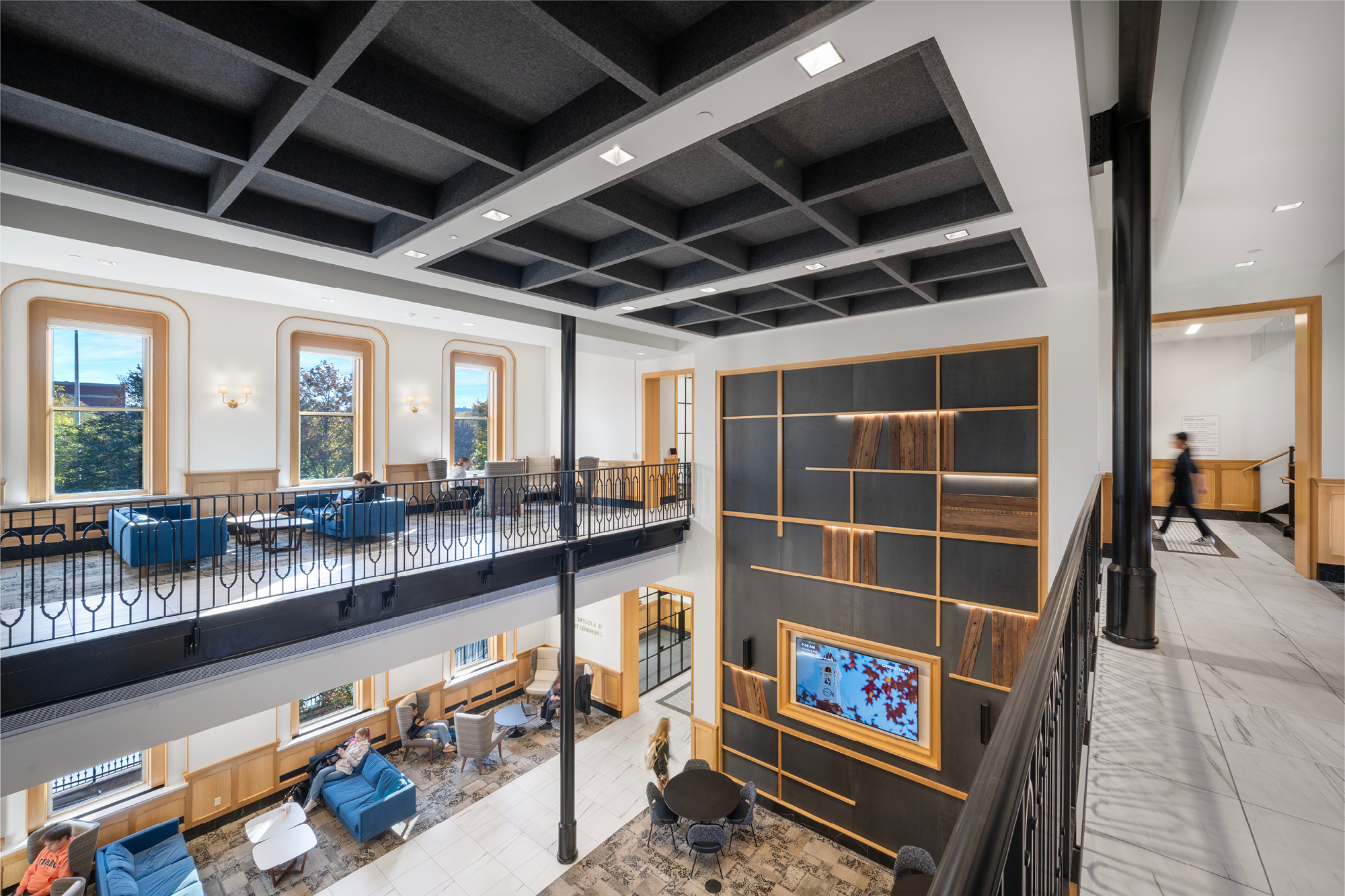
The renovation reopened the central core as a two-story student commons and reestablished the high-volume space that had long been hidden. Natural light now reaches deep into (and through) the building once again and transforms what had been a series of enclosed corridors into a welcoming place for students to meet, study, and gather.
Within the building’s compact footprint, spaces were carefully organized to support the daily functions of CLA.
Ground Level
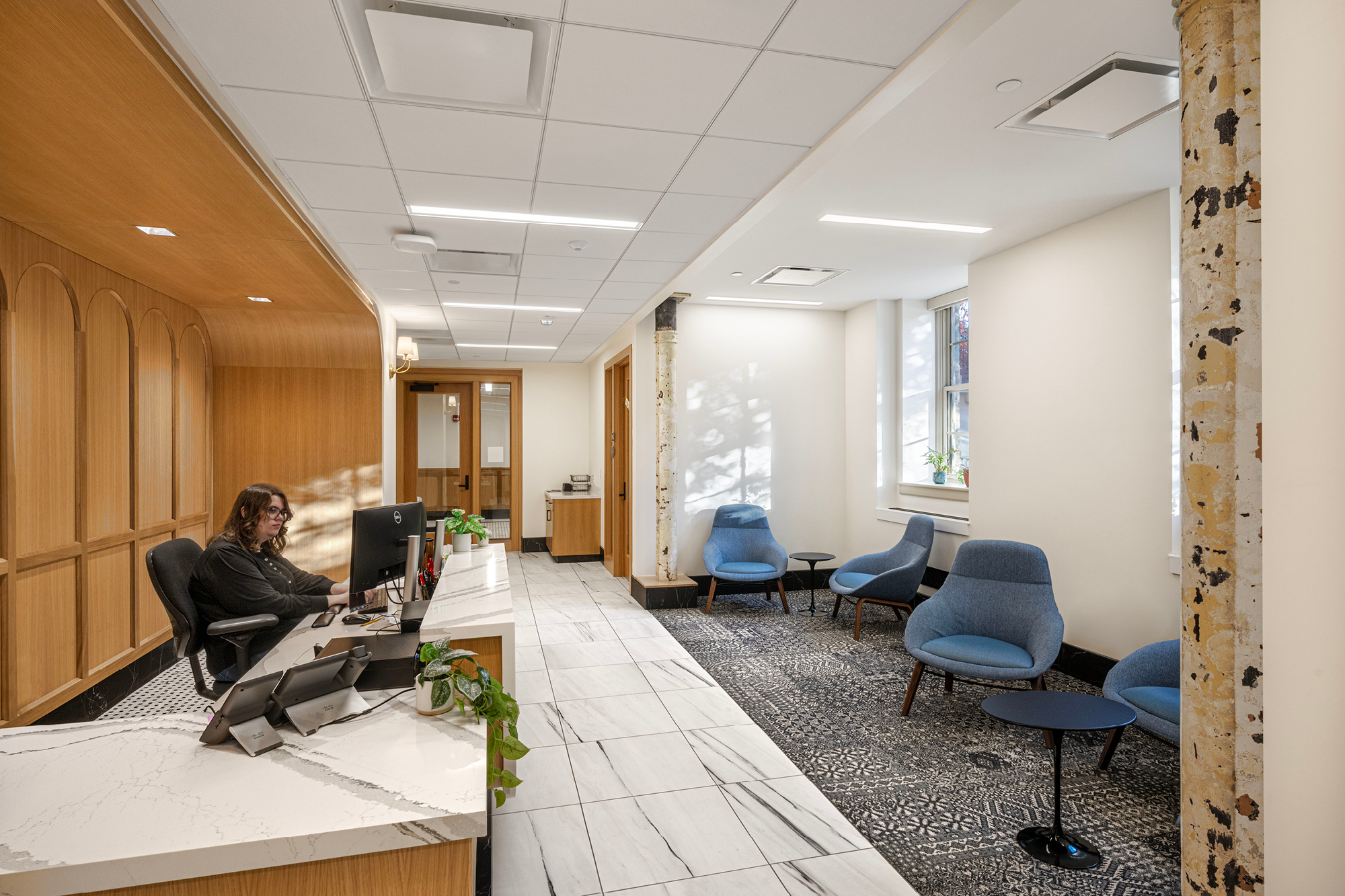
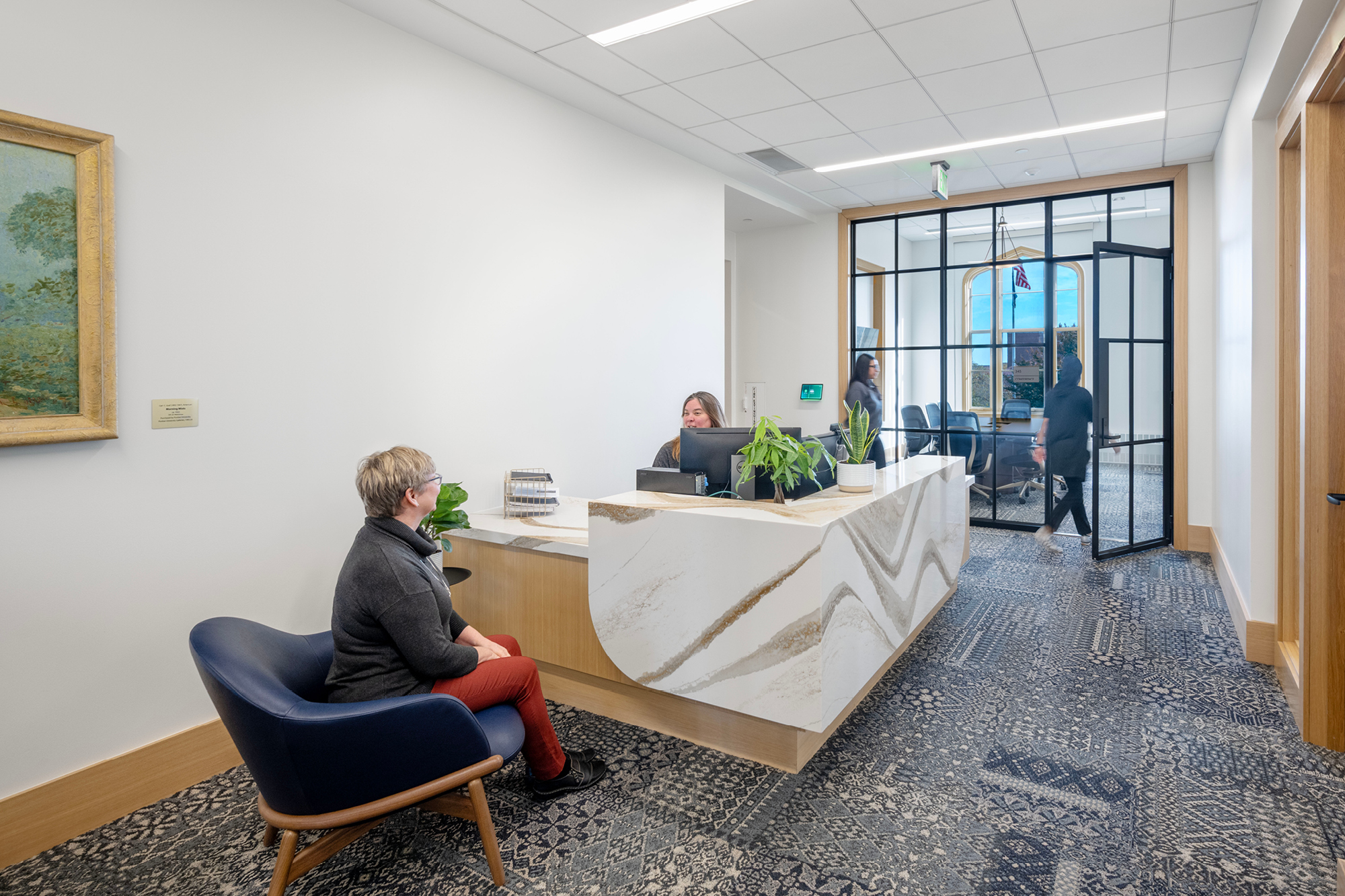
Student-facing services including Academic Advising, Recruitment, the Career Center, and Study Abroad.
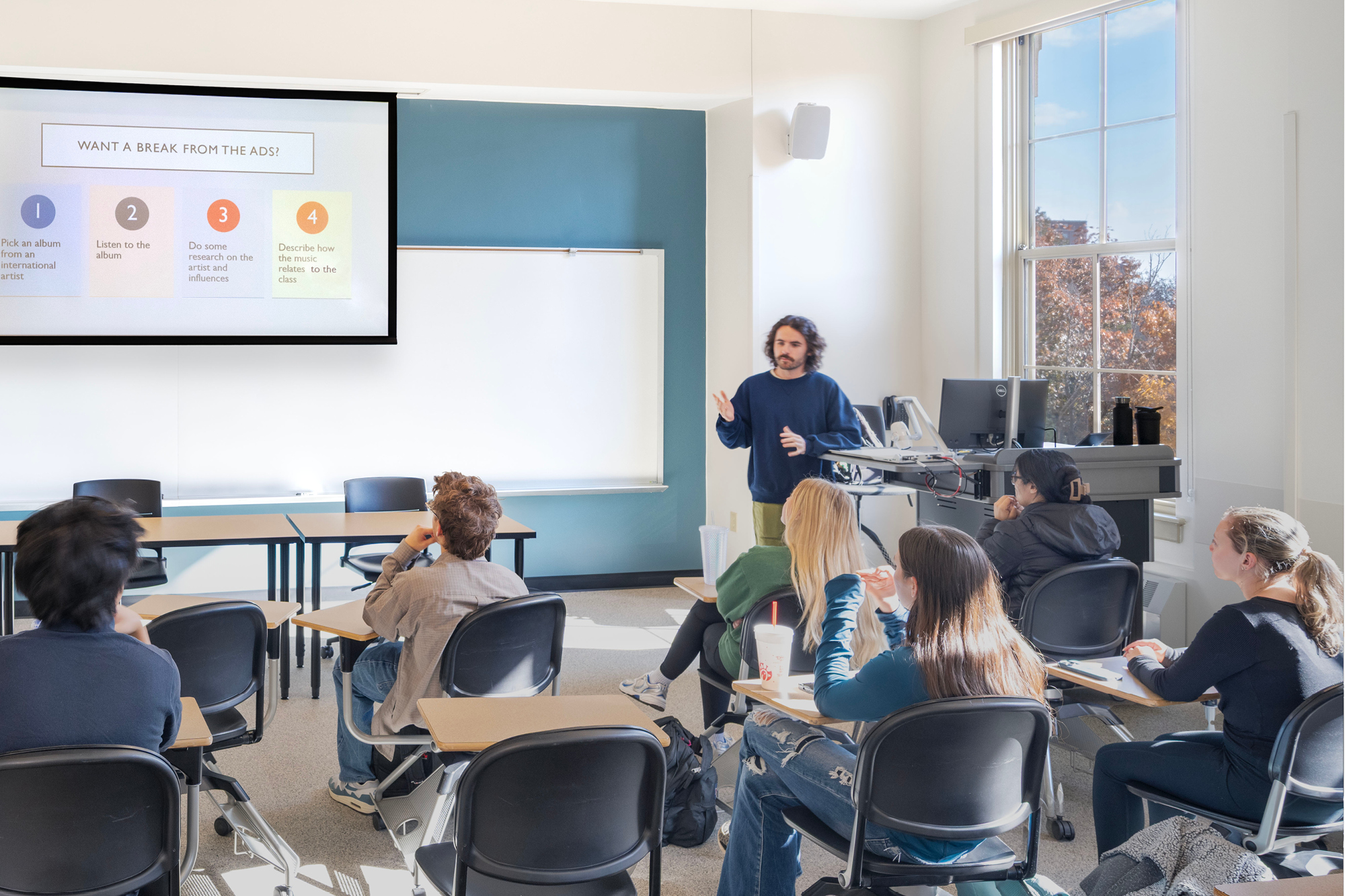
Floors 1 and 2
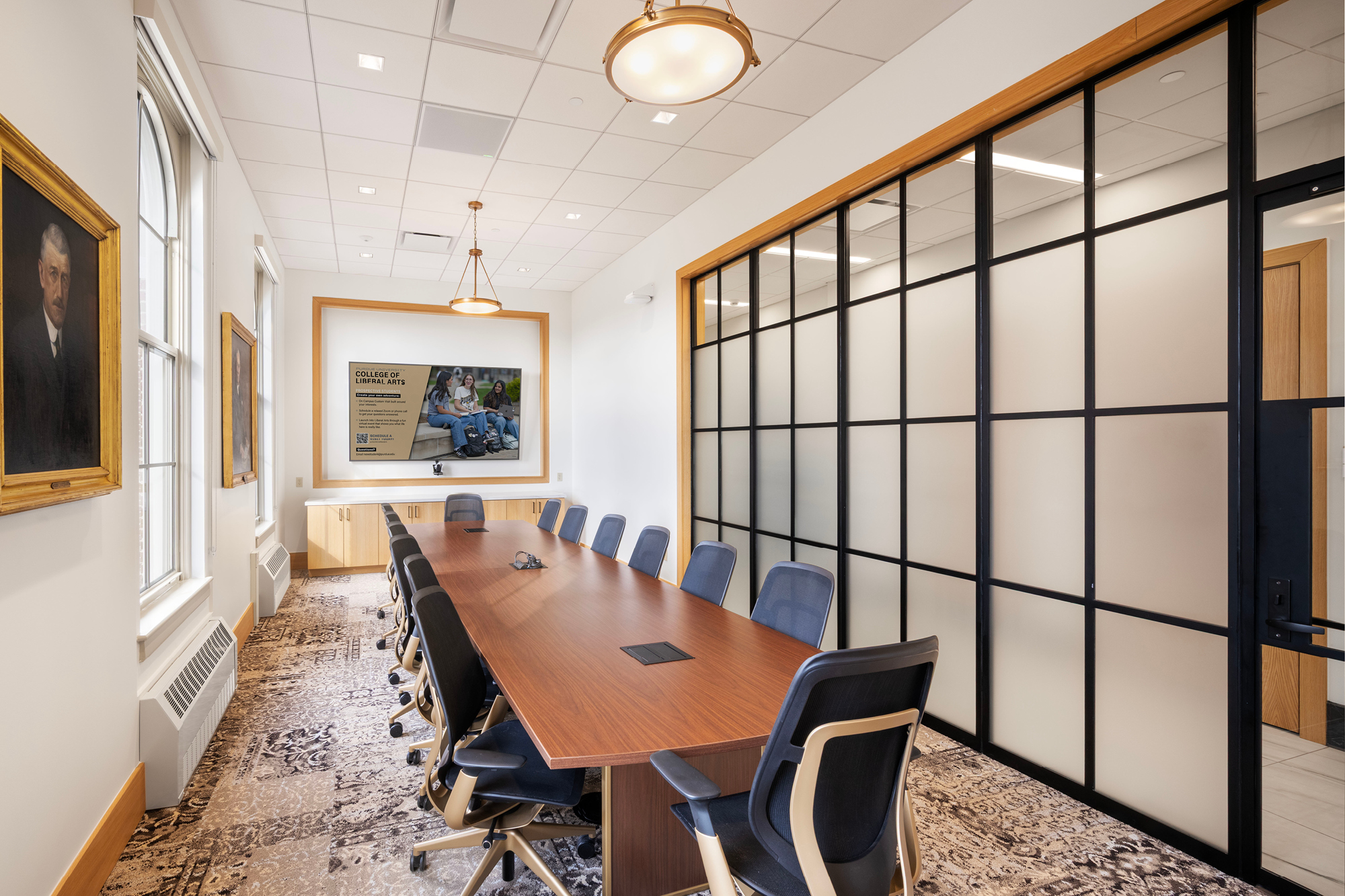
Classrooms, conference rooms, and flexible spaces for collaboration and informal study.
Floor 3
Administrative offices and the CLA Dean’s suite.
Above, the attic was adapted to house modern building systems so that the occupied floors could remain focused on student and academic spaces.
Connecting Past and Present
Throughout the renovation, the design team balanced restoration with renewal while honoring the building’s history and adapting it for contemporary campus life.
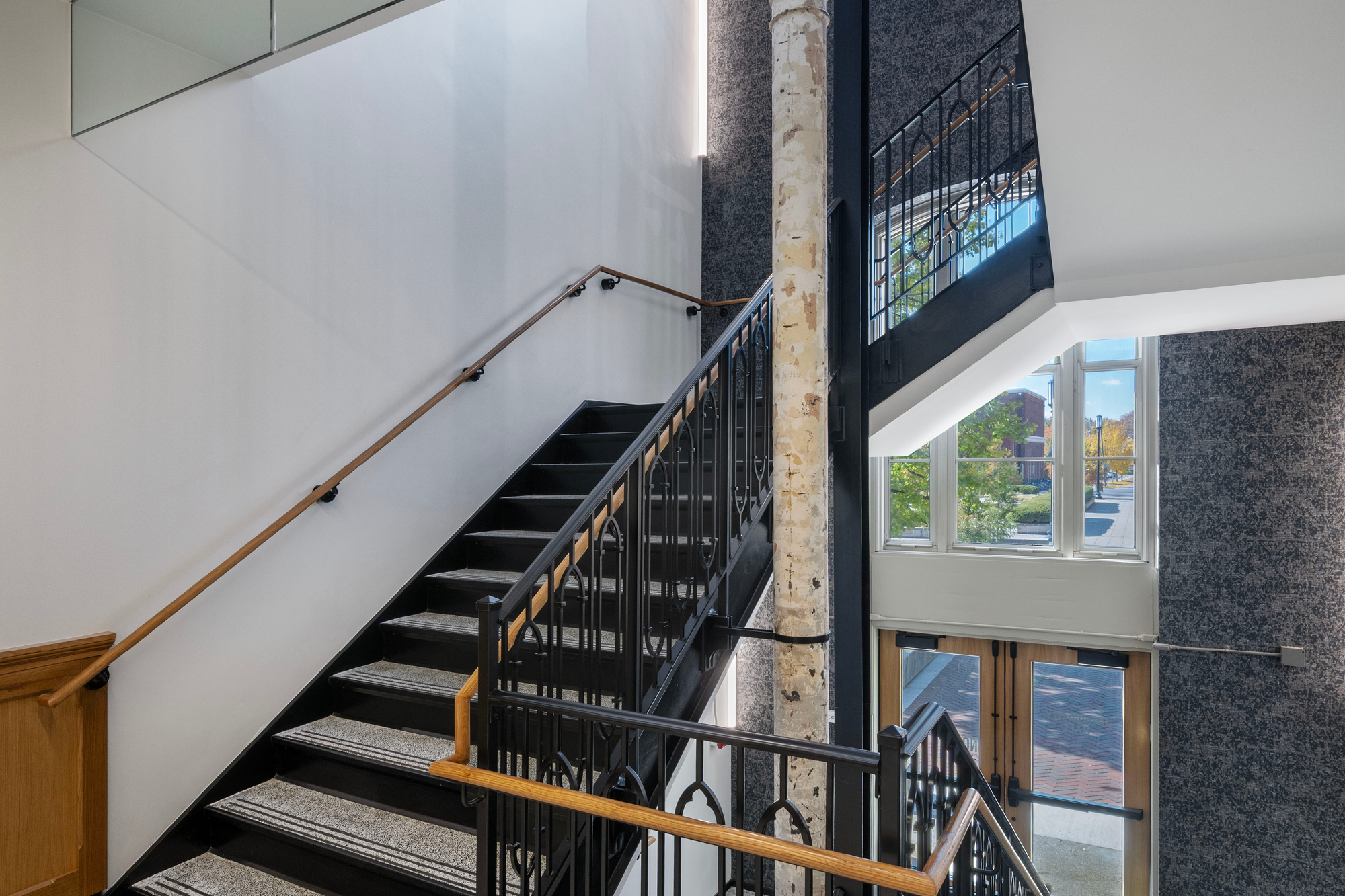
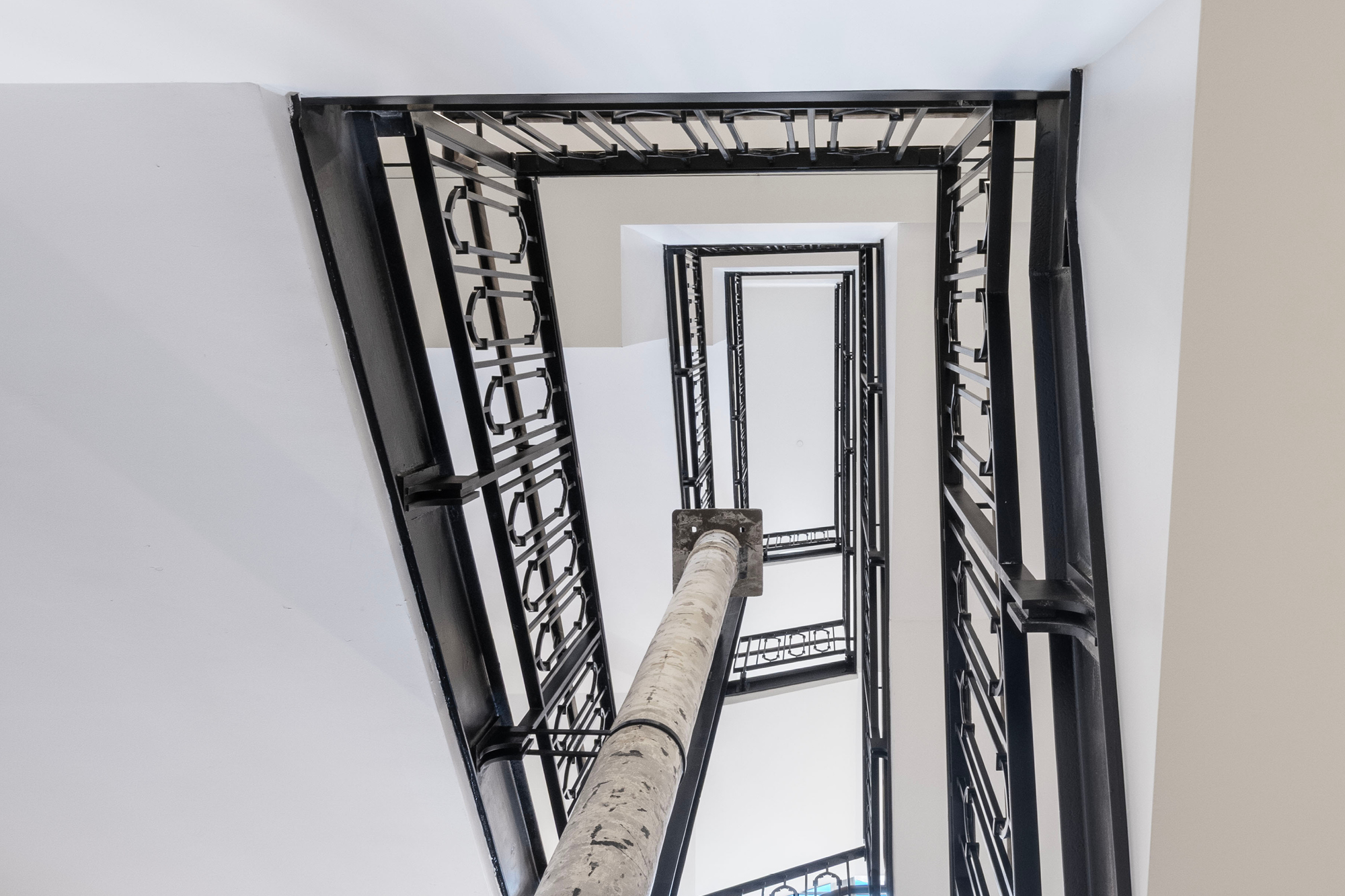
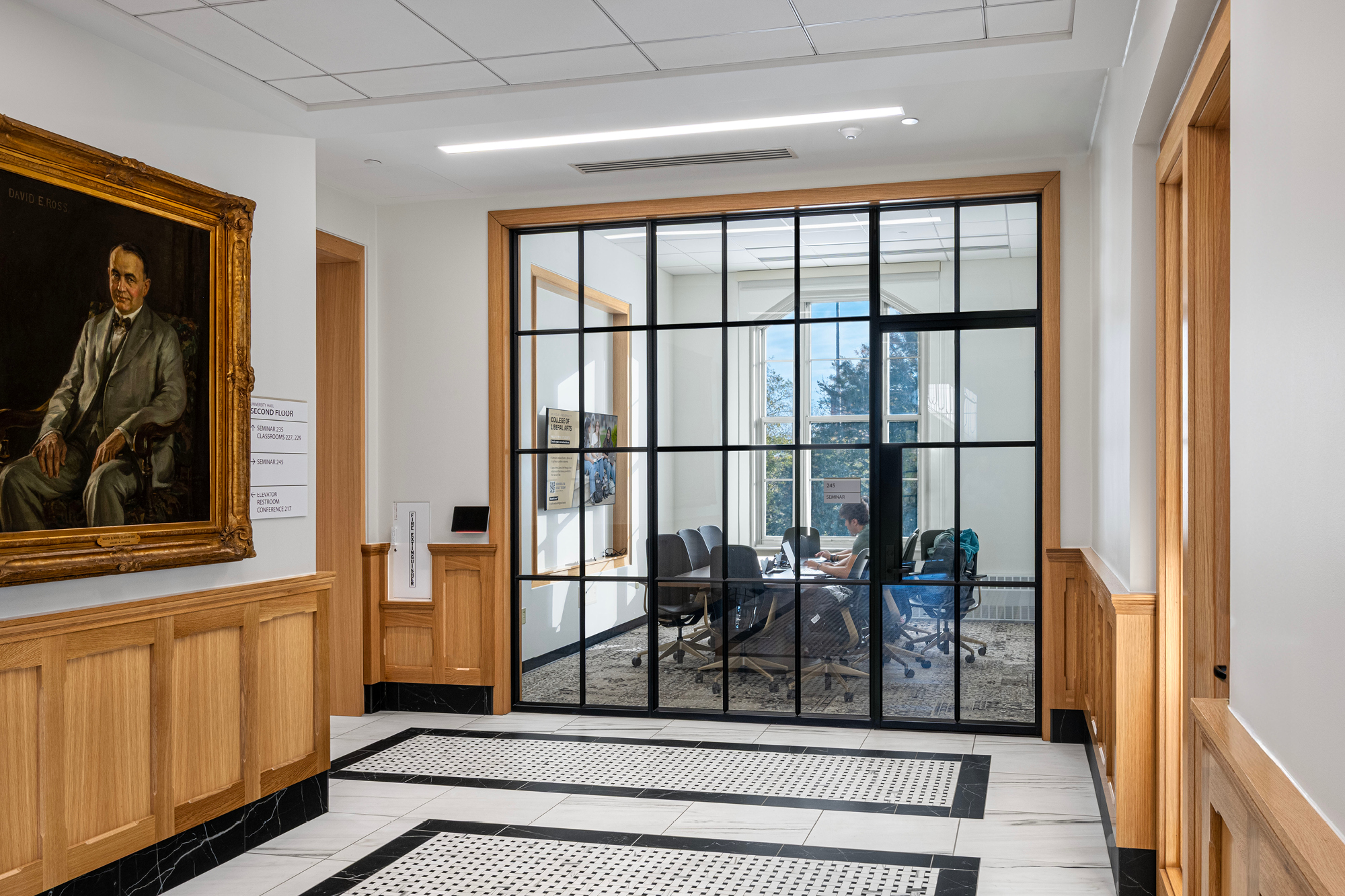
Natural light reaches every floor, supported by raised ceilings and transparent room fronts that open views across the building. Materials and details reference the building’s historic era without replicating it literally, creating a dialogue between past and present.
Original structural elements uncovered during construction were preserved and incorporated into the design. Wood reclaimed from historic roof timbers was transformed into art walls resembling abstract books. This installation references the building’s earliest use as a library.
A Renewed Campus Gathering Place
Today, University Hall once again serves as a place of connection and community. What had become a dark and fragmented interior of double-loaded corridors and small offices has been reimagined as a light-filled environment where students can seek guidance, collaborate with peers, and engage with the life of the college.
Through careful study, thoughtful design, and a respect for history, the renovation restores new purpose to one of the university’s oldest buildings and ensures that it will continue to serve generations of students to come.
Project Team
Owner: Purdue University
Architectural Design & Study: MSKTD & ASSOCIATES and Workshop Architects
Interior Design: MSKTD
Structural Engineering: Fink Roberts & Petrie, Inc.
MEP: MSKTD
Technology: Design 27
Site Utilities: Applied Engineering Services
Construction: Kettelhut Construction