
BEHIND THE DESIGN: IU HEALTH FISHERS TOWER EXPANSION
Transforming a project for IU Health Fishers from a Specialty Hospital into a Full-Service Community Hospital for Families and Practitioners to support the growing community.
PROJECT TEAM
Owner: IU Health
Architecture: MSKTD & ASSOCIATES and HKS
Engineering: BSA, KBSO, JPS Consulting Engineers, Design 27
Interior Design: Four Point Design
Landscape Architecture: JPS Consulting Engineers
Construction: Messer/Harmon Construction
RESPONDING TO FISHERS’ RAPID GROWTH
When IU Health opened the campus in Fishers in 2011, it was originally designed as a specialty hospital focusing on cardiac and orthopedic care. Since then, Fishers’ population has surged past Carmel to become Indiana’s fourth largest city, with one of the youngest median ages statewide.
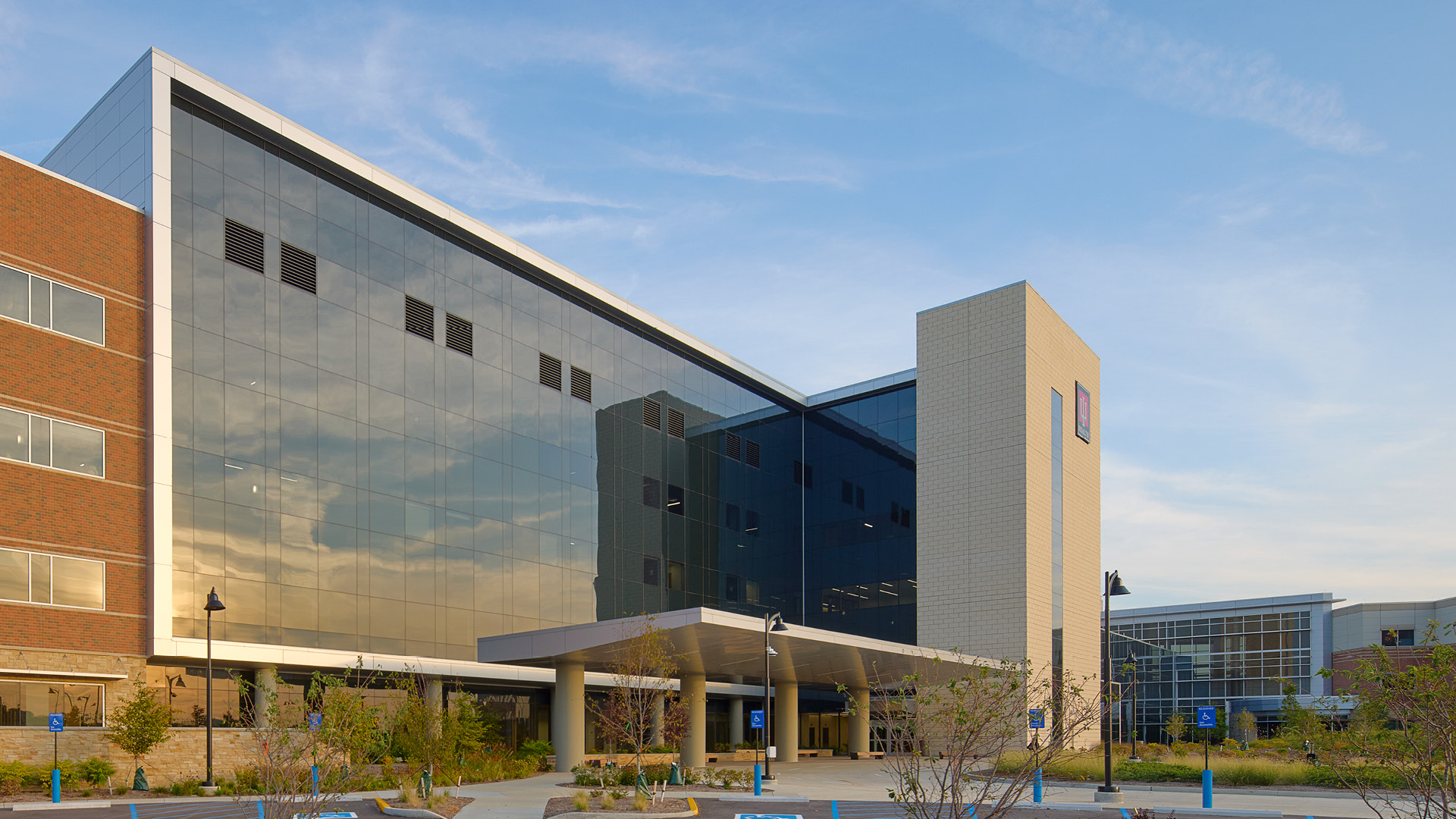
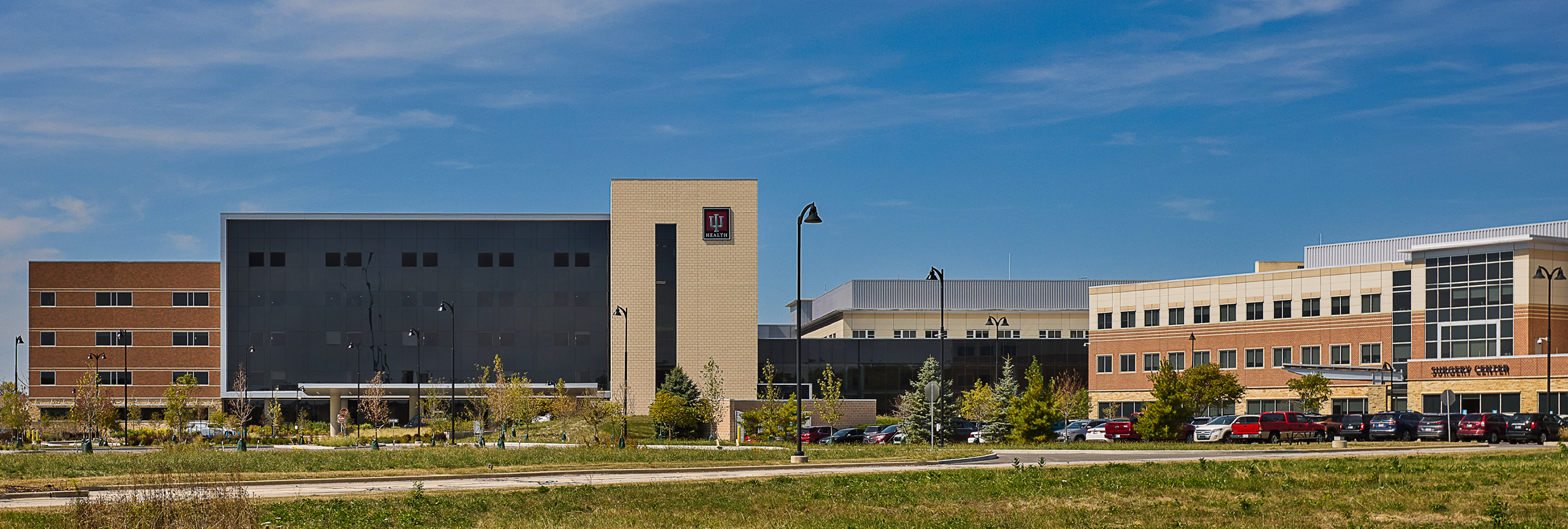
In a strategic move to provide healthcare options that match the changing demographic and increased growth, MSKTD & ASSOCIATES, in a joint venture with HKS, began the project for IU Health Fishers to lead the architectural design for a four-story expansion tower. The vision for the campus includes new and expanded services in obstetrics and gynecology, Riley Children’s Health emergency medicine services, and expanded staff support spaces—to meet increasing demand and elevate the patient and practitioner experience alike.
KEY FEATURES BY FLOOR
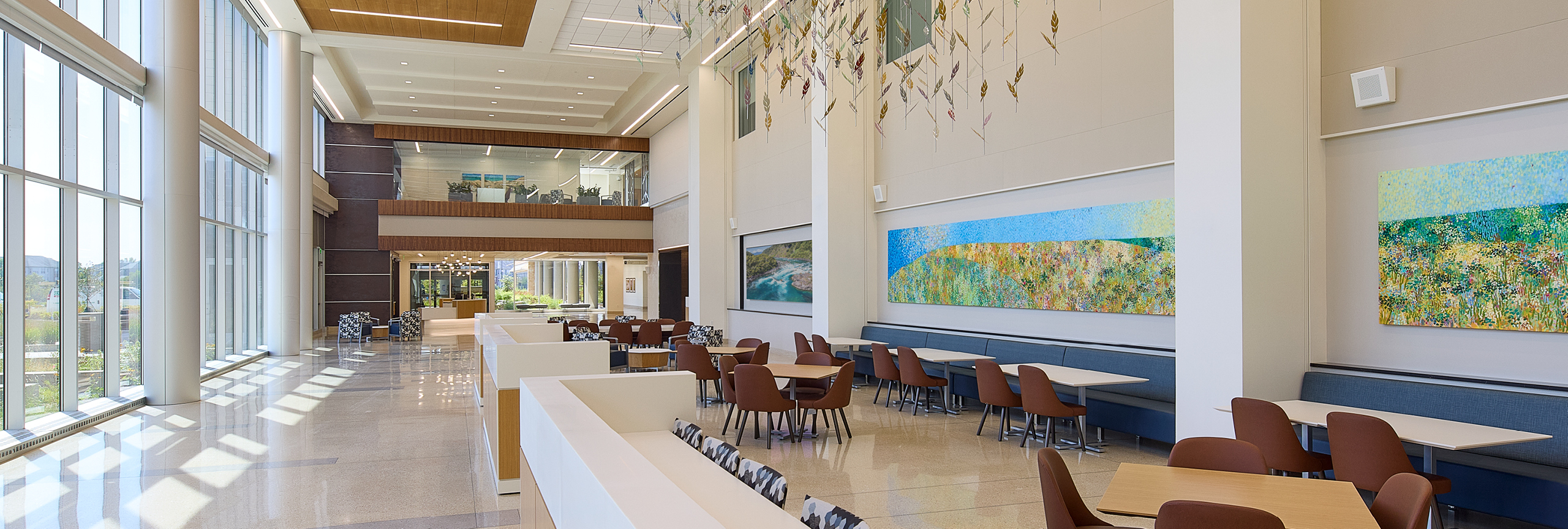
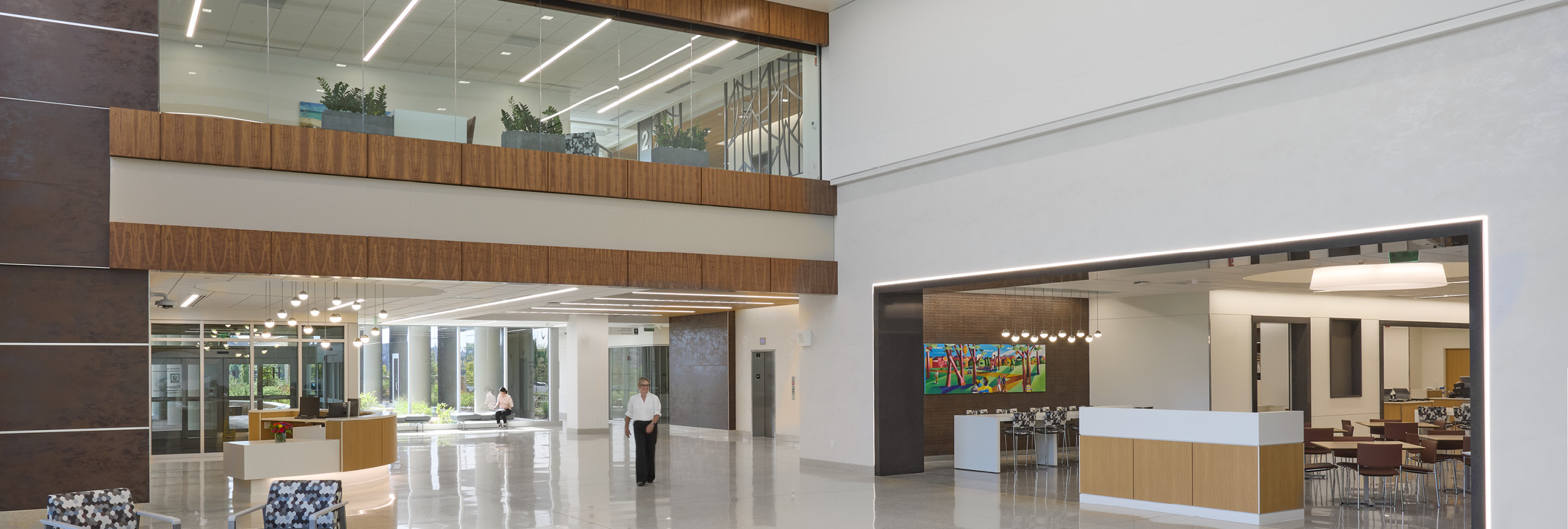
FIRST FLOOR: new entrance with reception desk, outpatient OB/GYN and Breast/ Endocrine Surgery clinics, mammography imaging suites, expansion of support services space including a new cafeteria
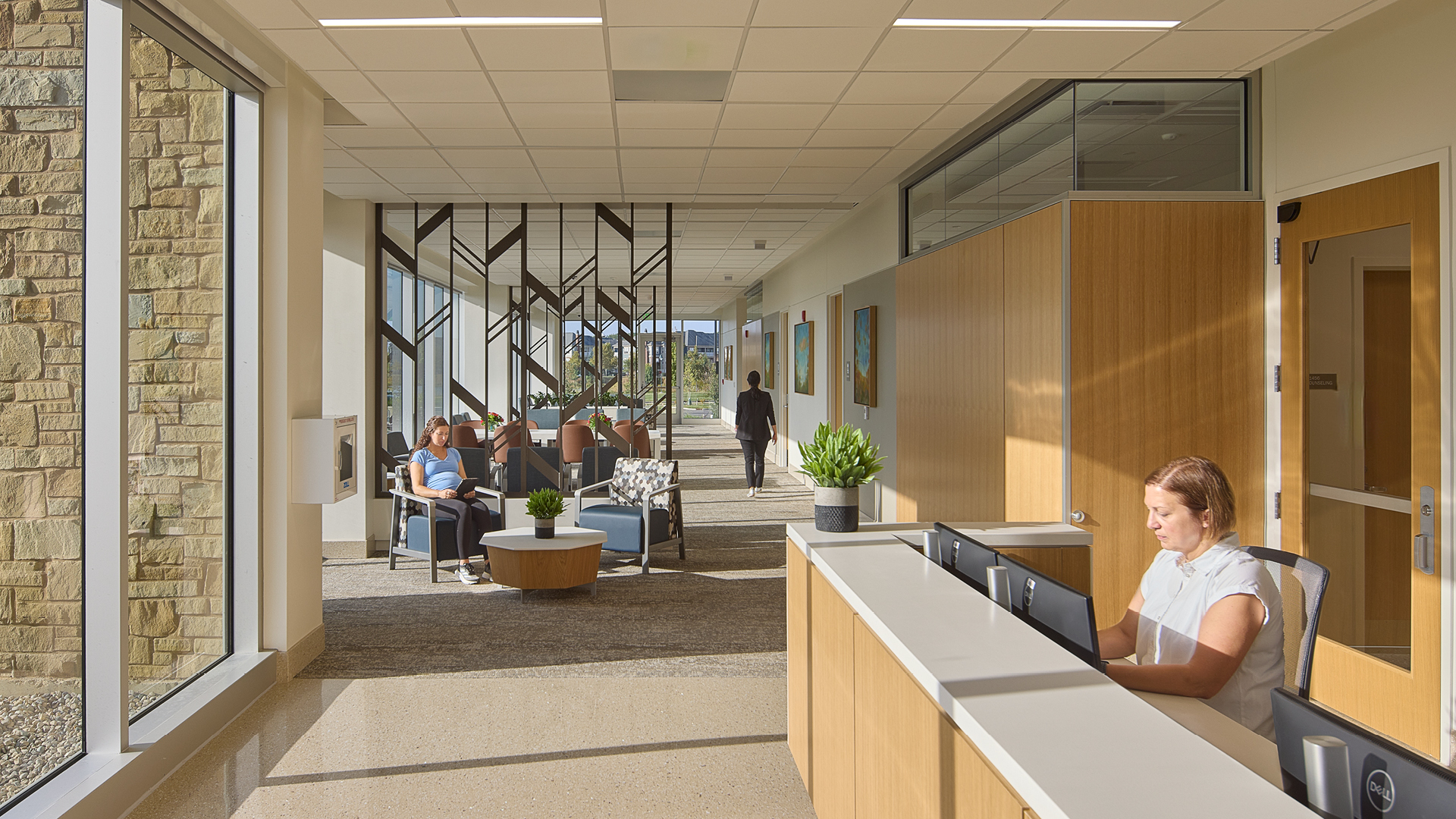
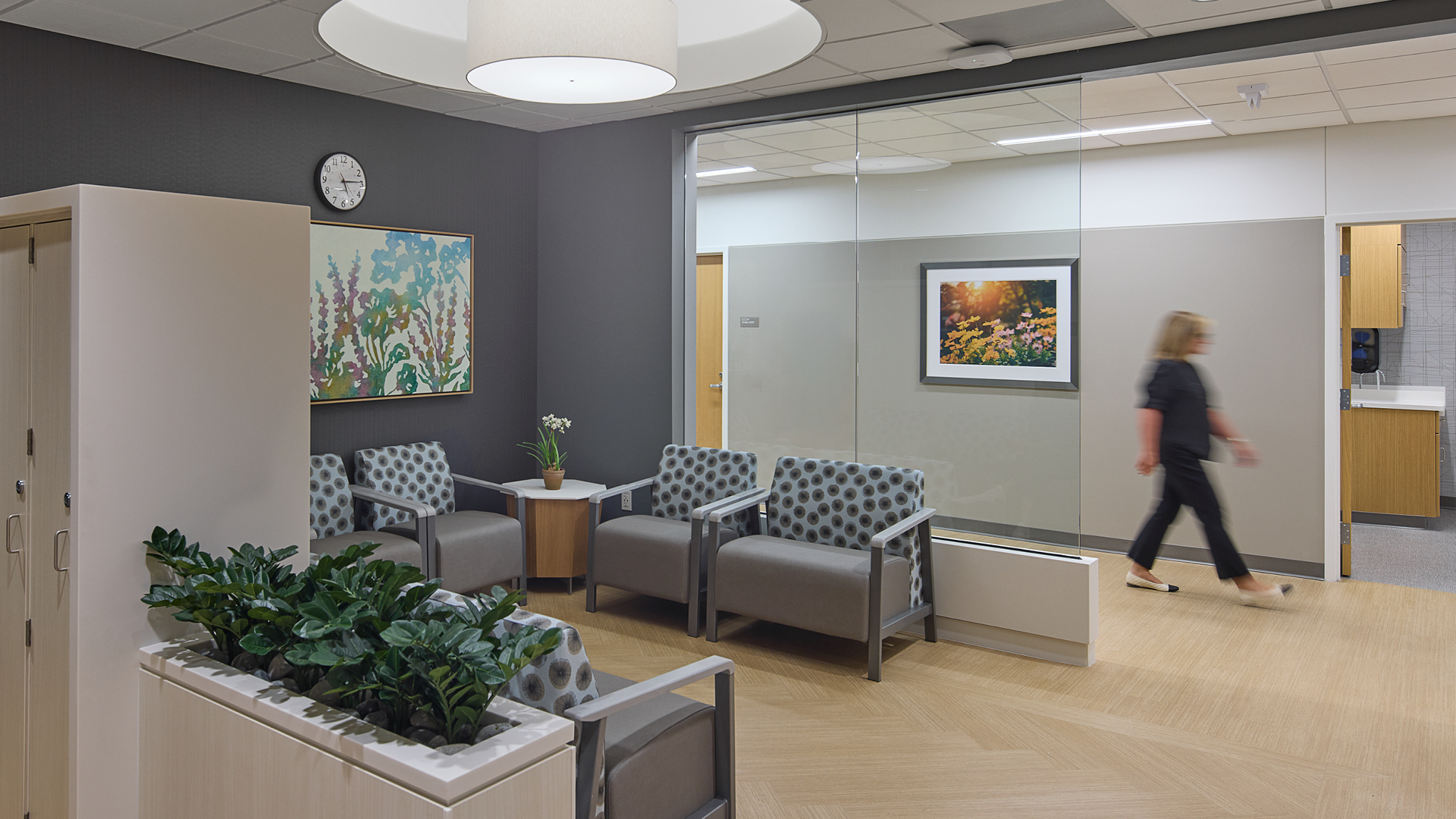
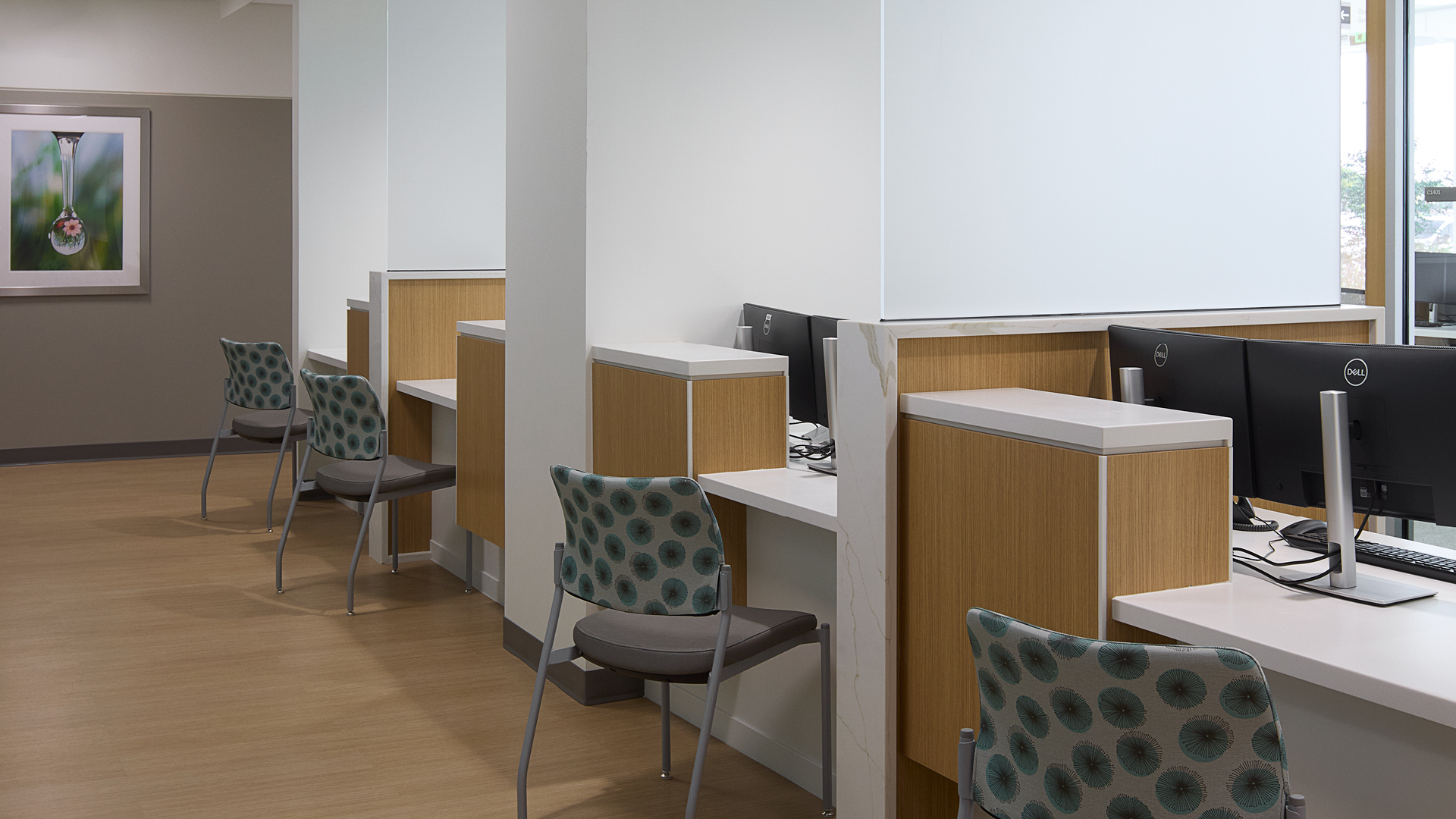
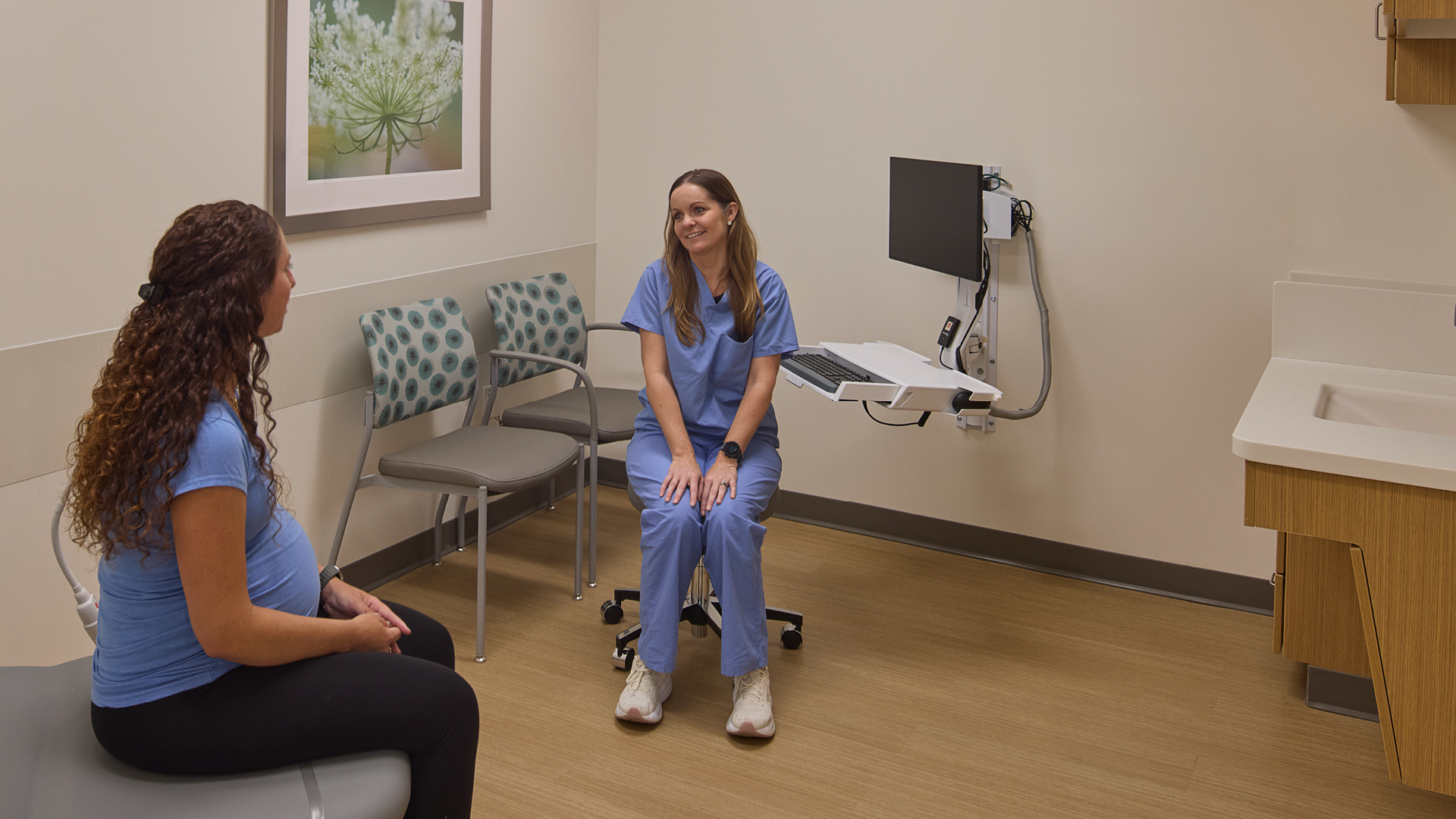
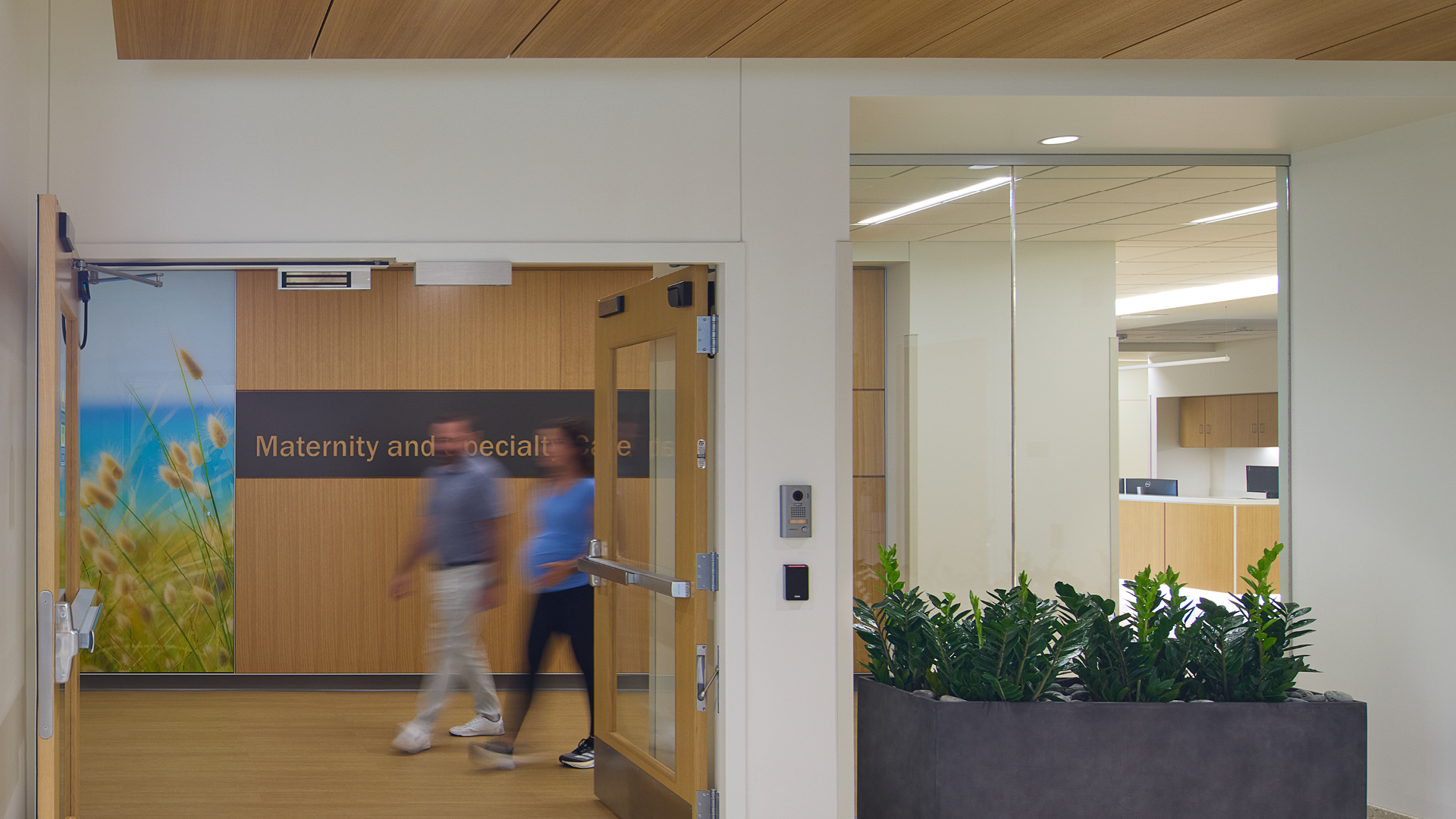
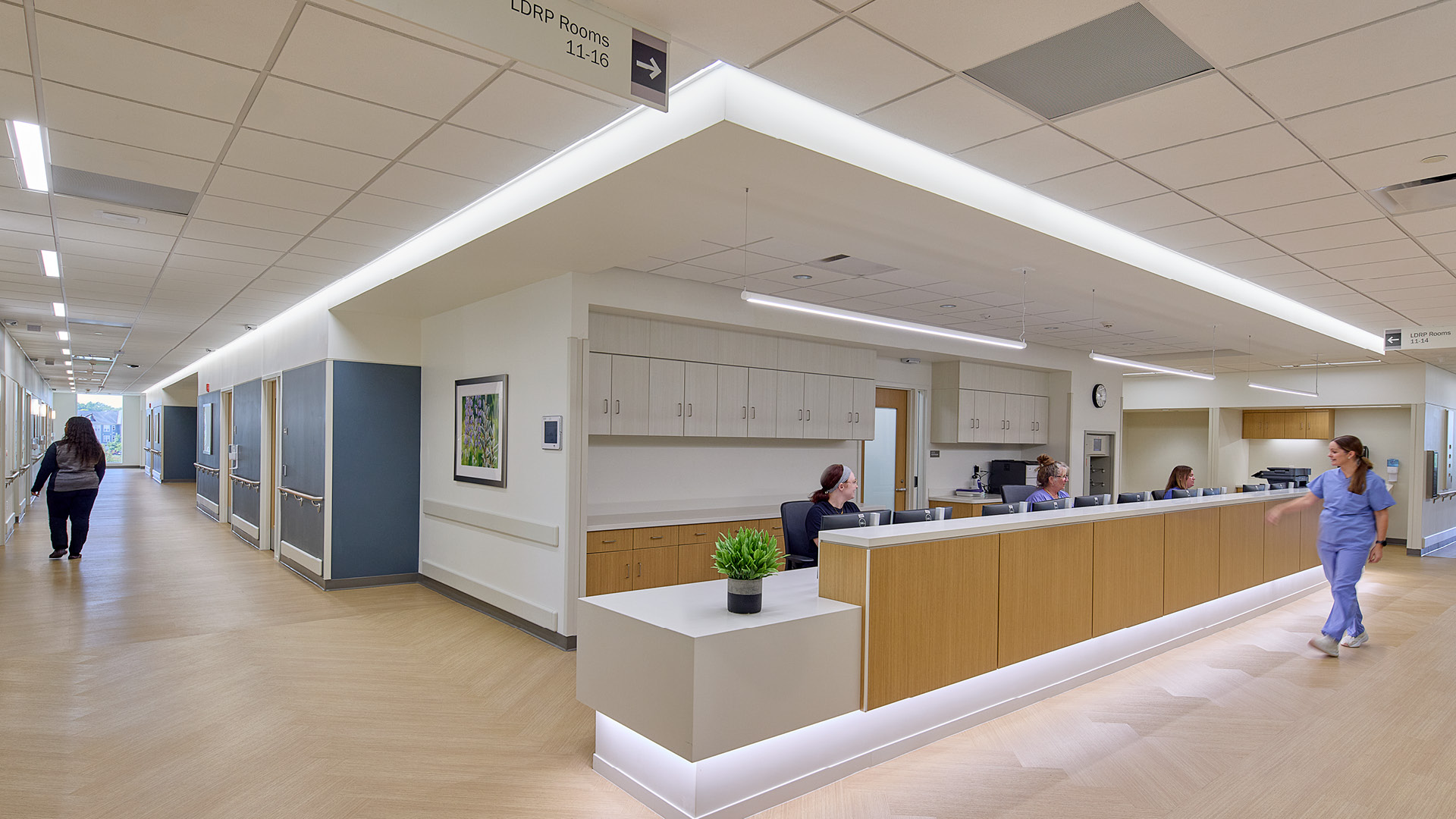
SECOND FLOOR: full-service LDRP (Labor, Delivery, Recovery, Postpartum) unit with 12 dedicated rooms plus four shelled for future expansion, 4 Triage/OBED rooms and 2 dedicated C-Section OR rooms
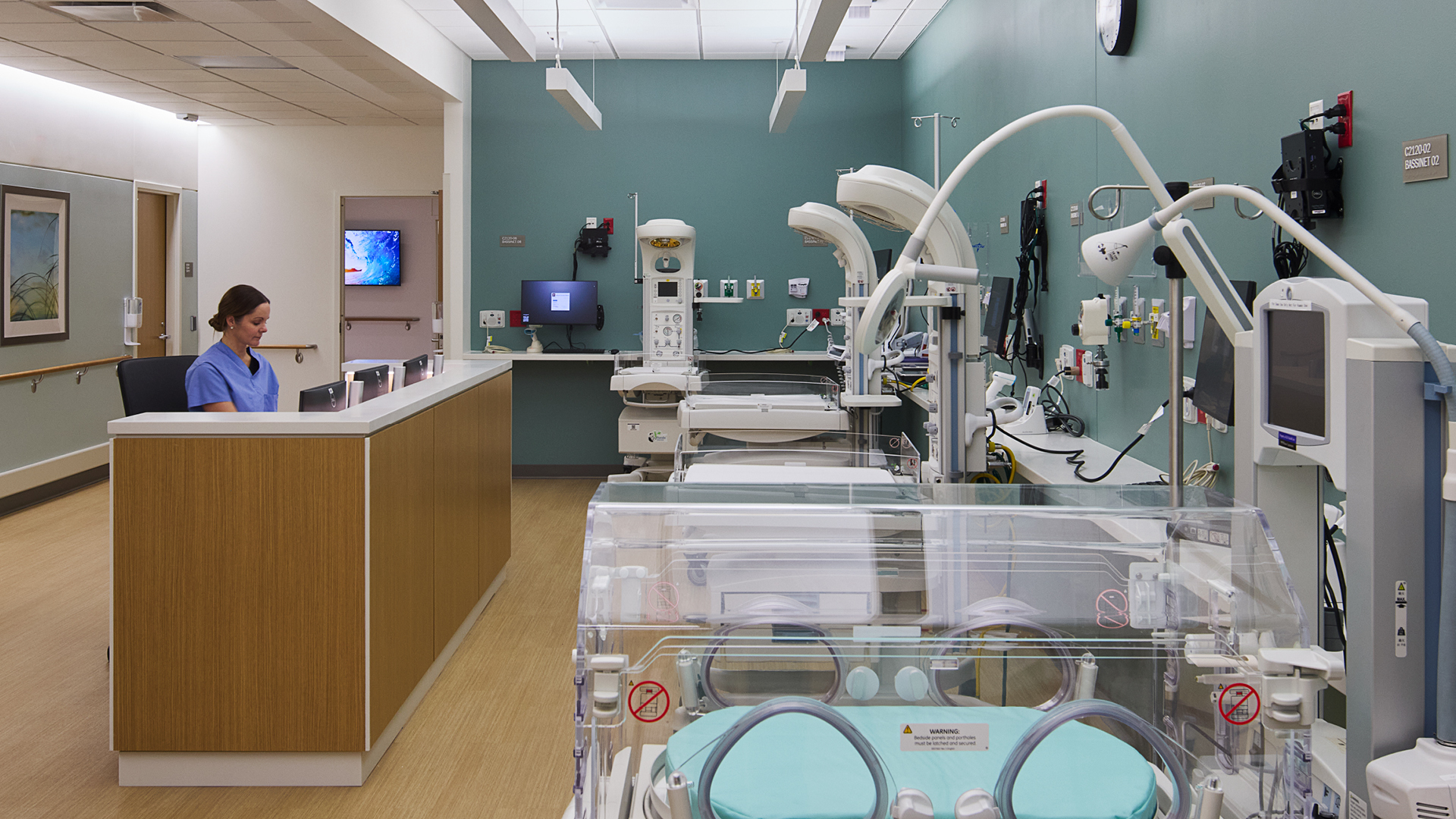
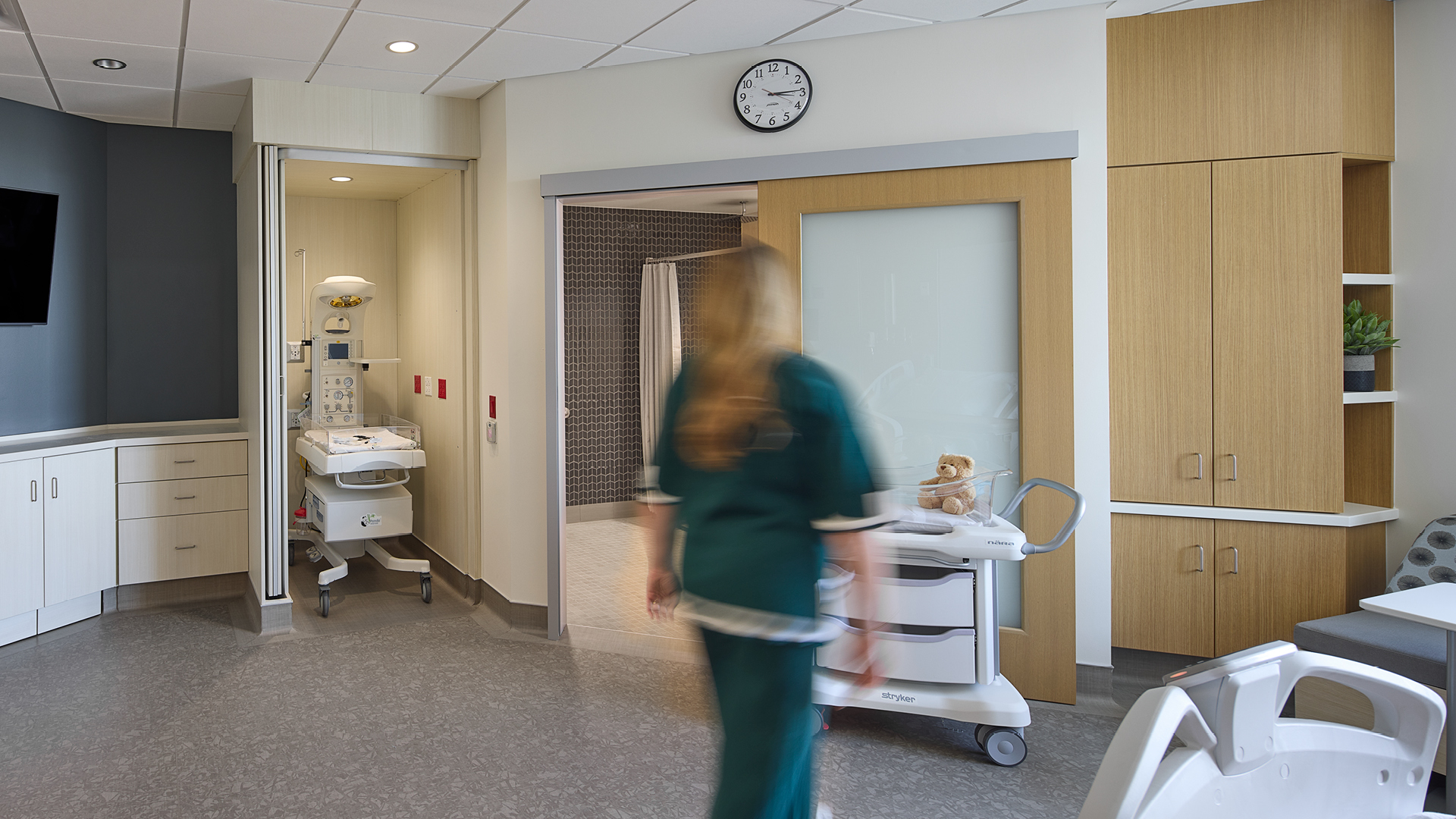
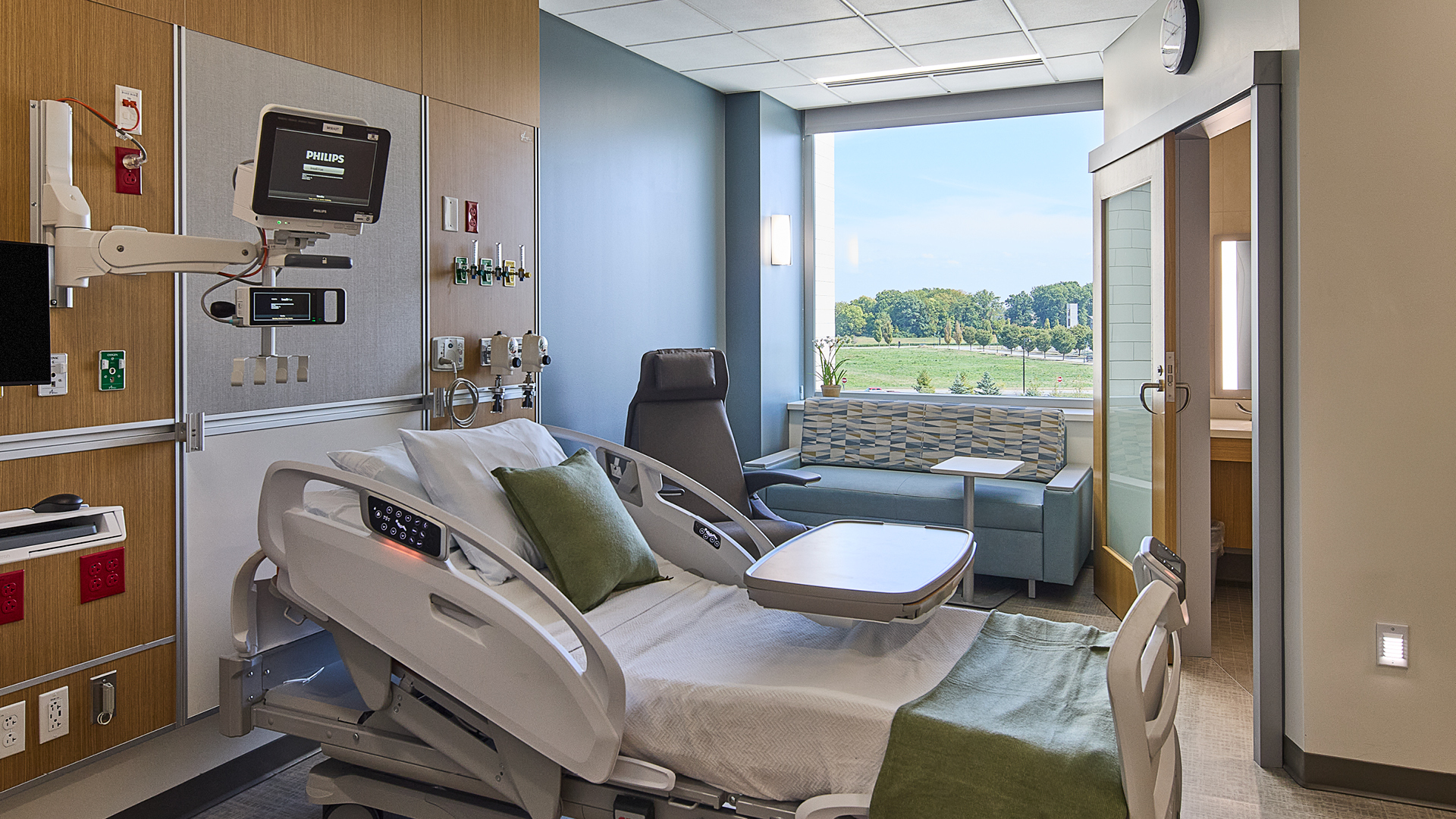
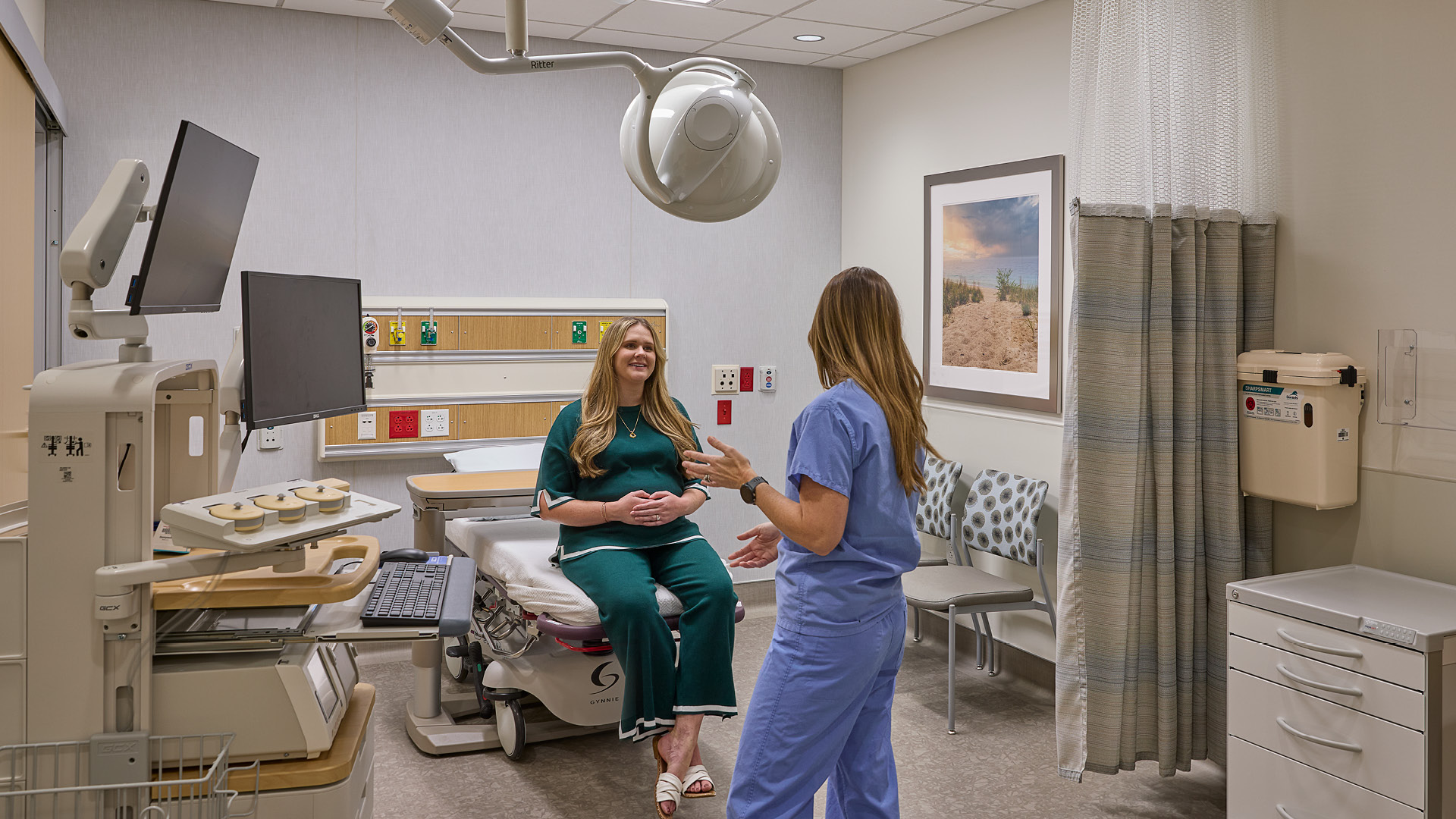
THIRD FLOOR: 32 new med-surg beds
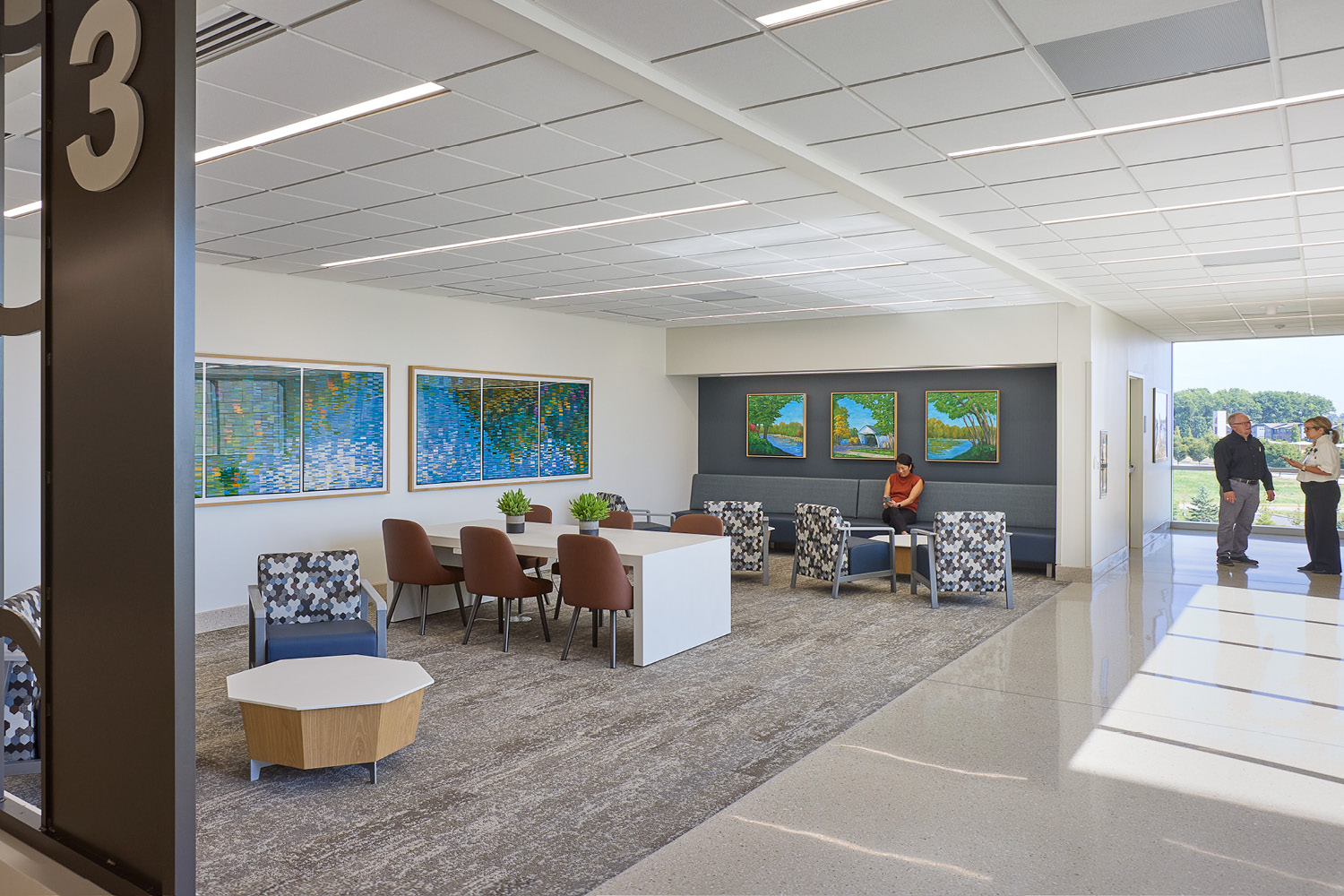
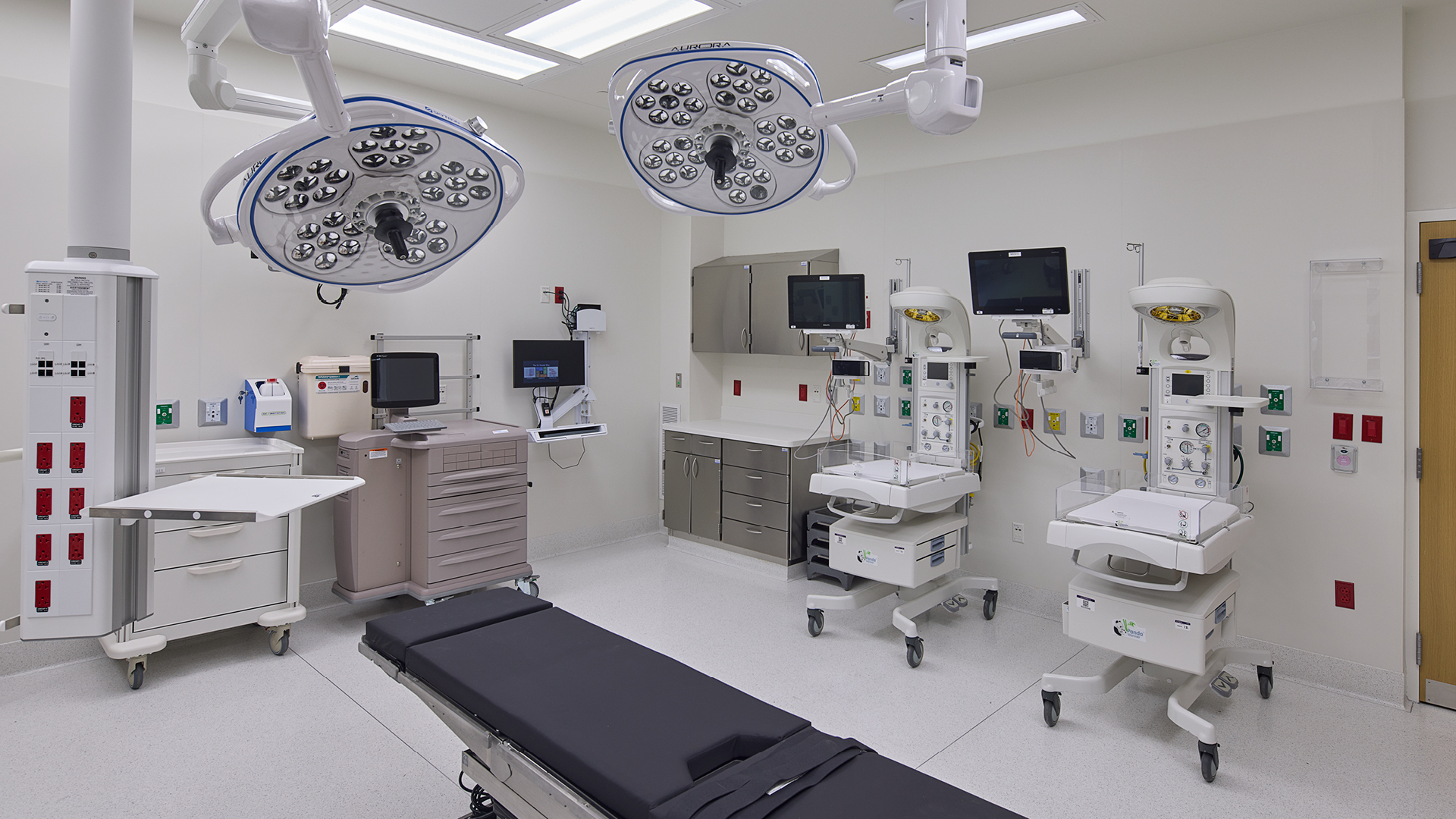
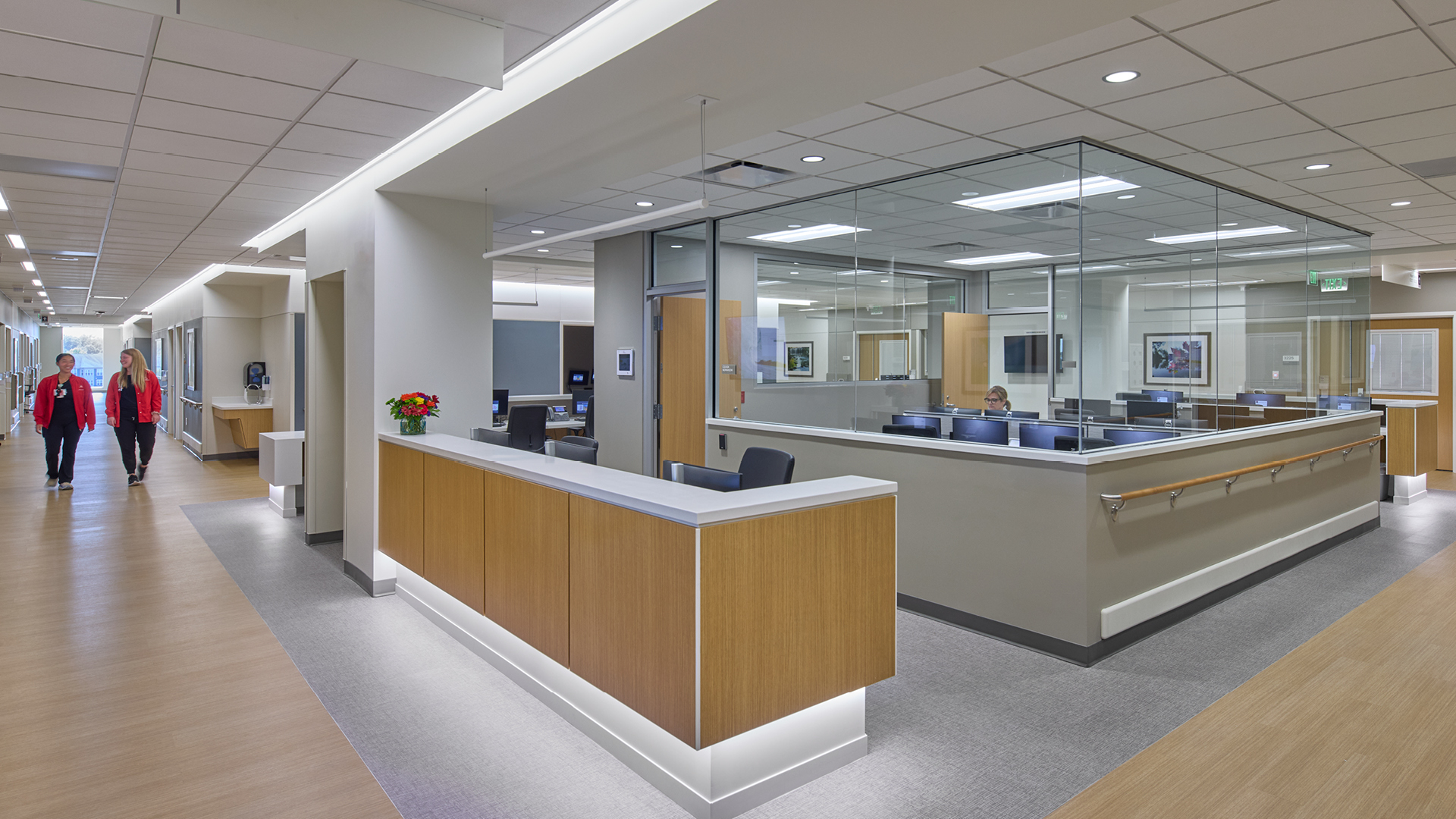
FOURTH FLOOR: shelled for future growth, reflecting a design that’s both responsive and forward-looking
EARLY ACTIVATION FOR OB/GYN SERVICES
Recognizing that new services require early growth and operational planning, MSKTD and HKS proactively designed clinical suites within the existing medical office building to begin building patient volume and establishing care teams. This strategic move allowed recruitment efforts to begin well ahead of the tower’s opening. To support the development of women’s health services, an outpatient office was established in the former administrative suite more than a year before the tower’s completion. This early activation helped lay the groundwork for staffing and patient engagement, ensuring that physicians, nurses, and care teams were in place to meet community needs from day one.
EMERGENCY SERVICES REIMAGINED FOR CHILDREN
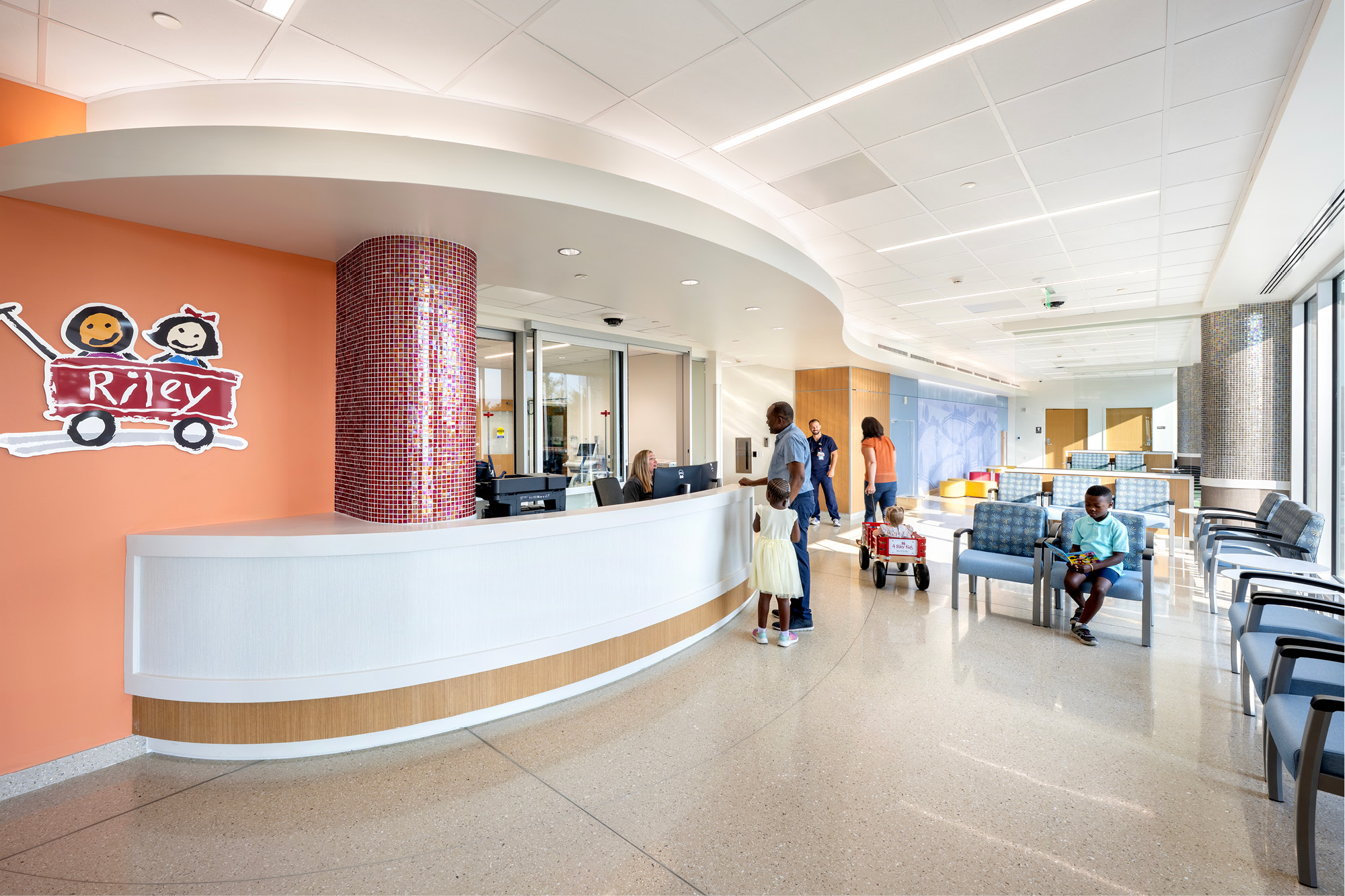
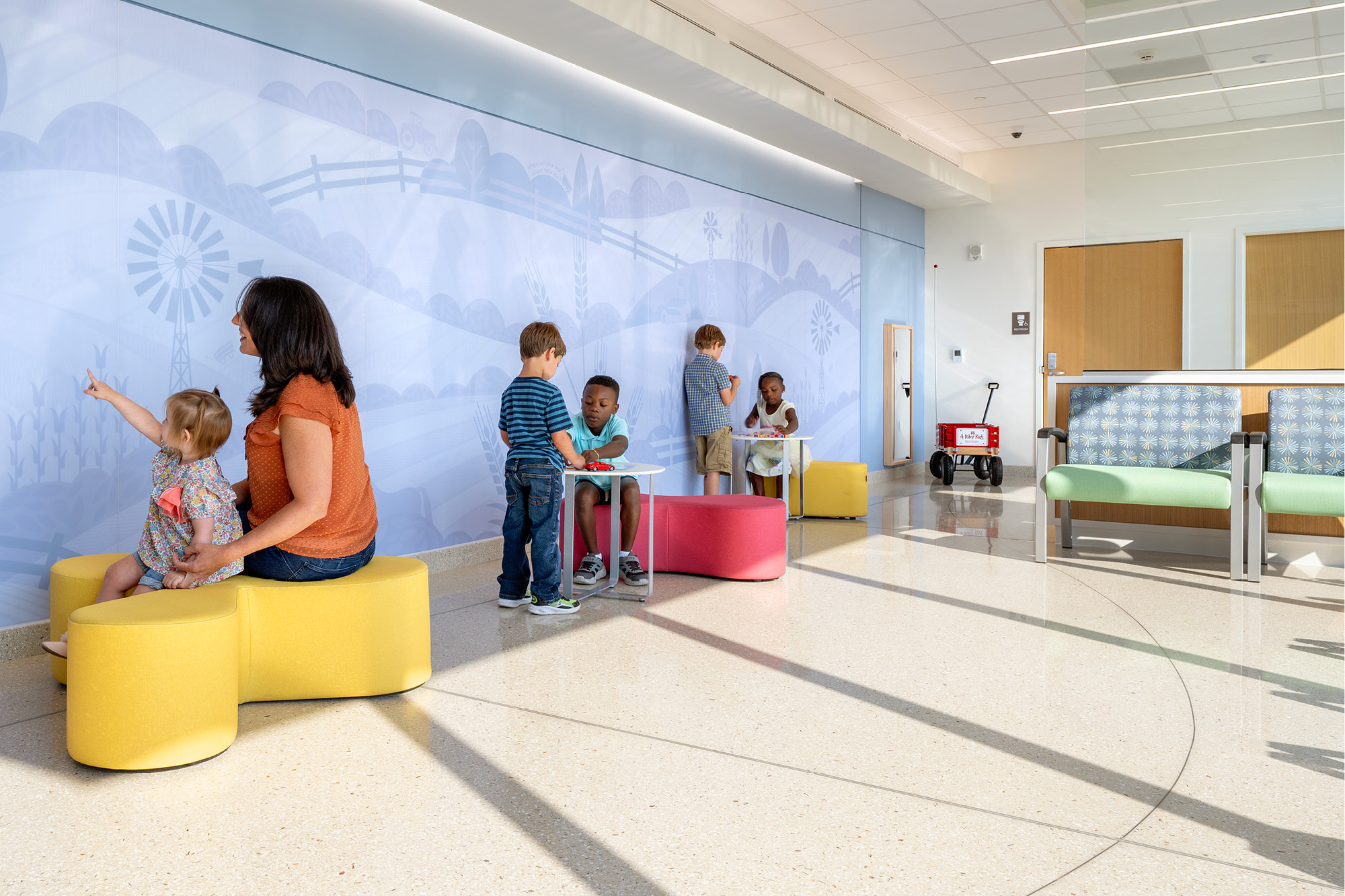
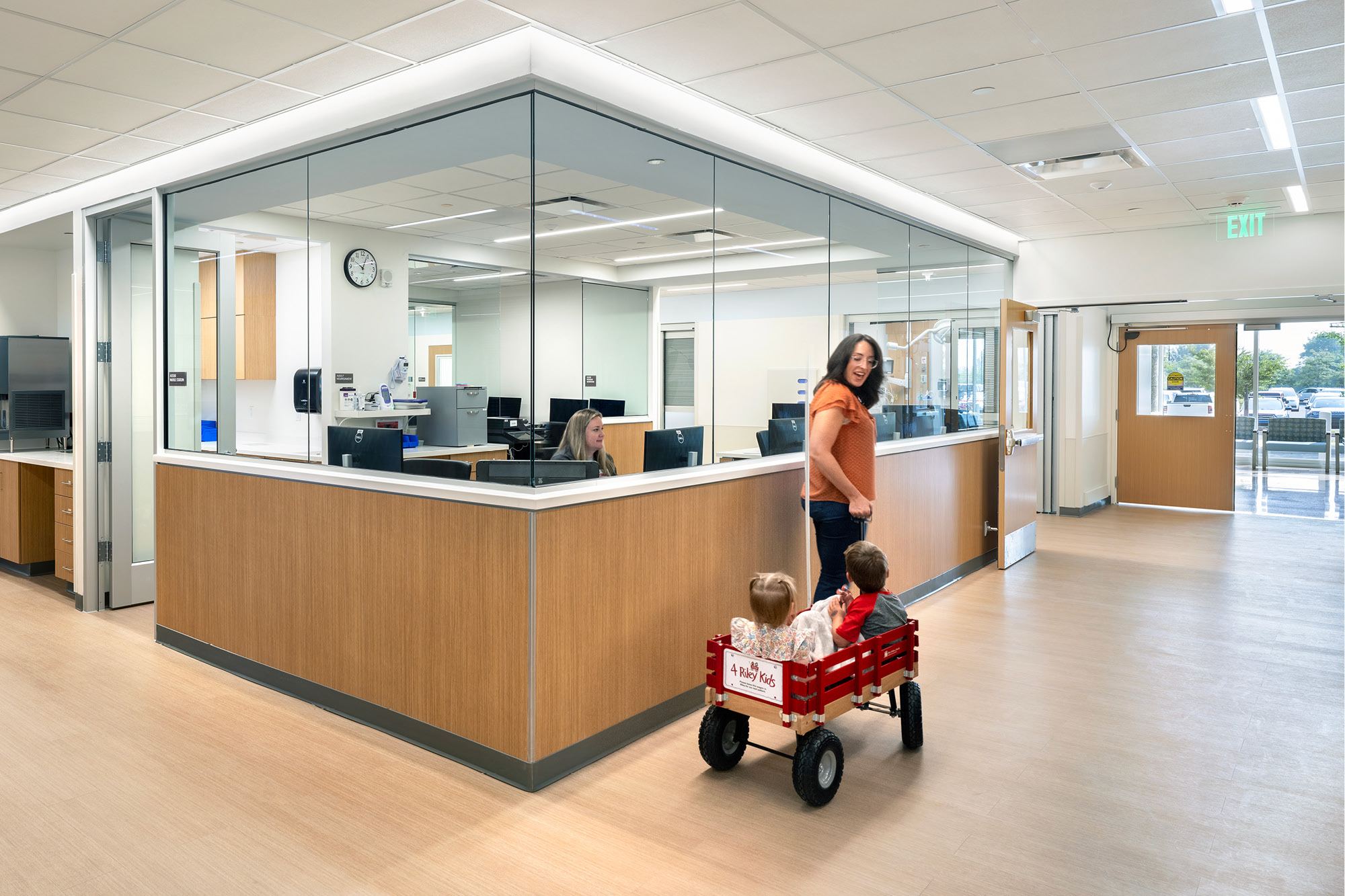
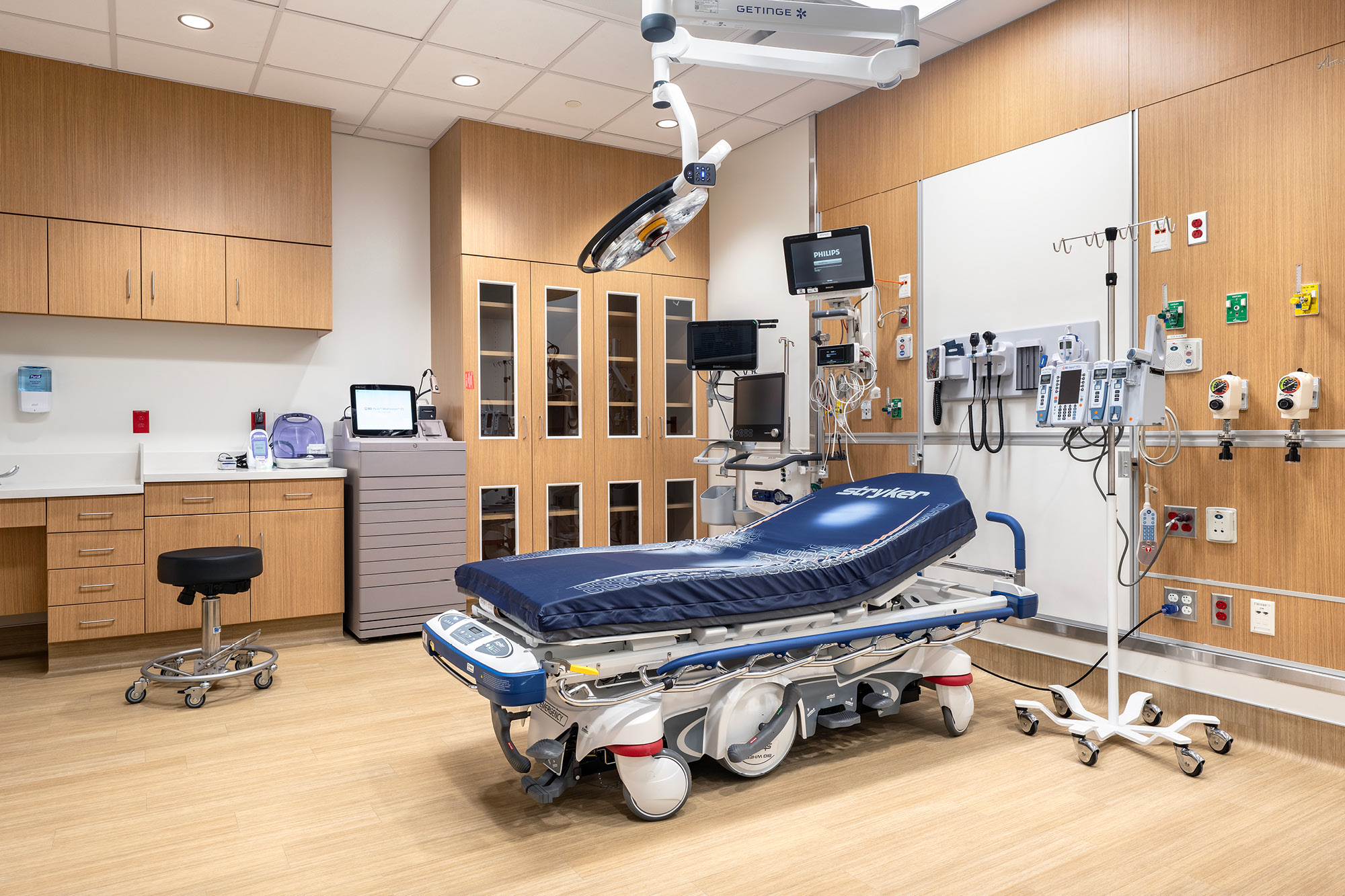
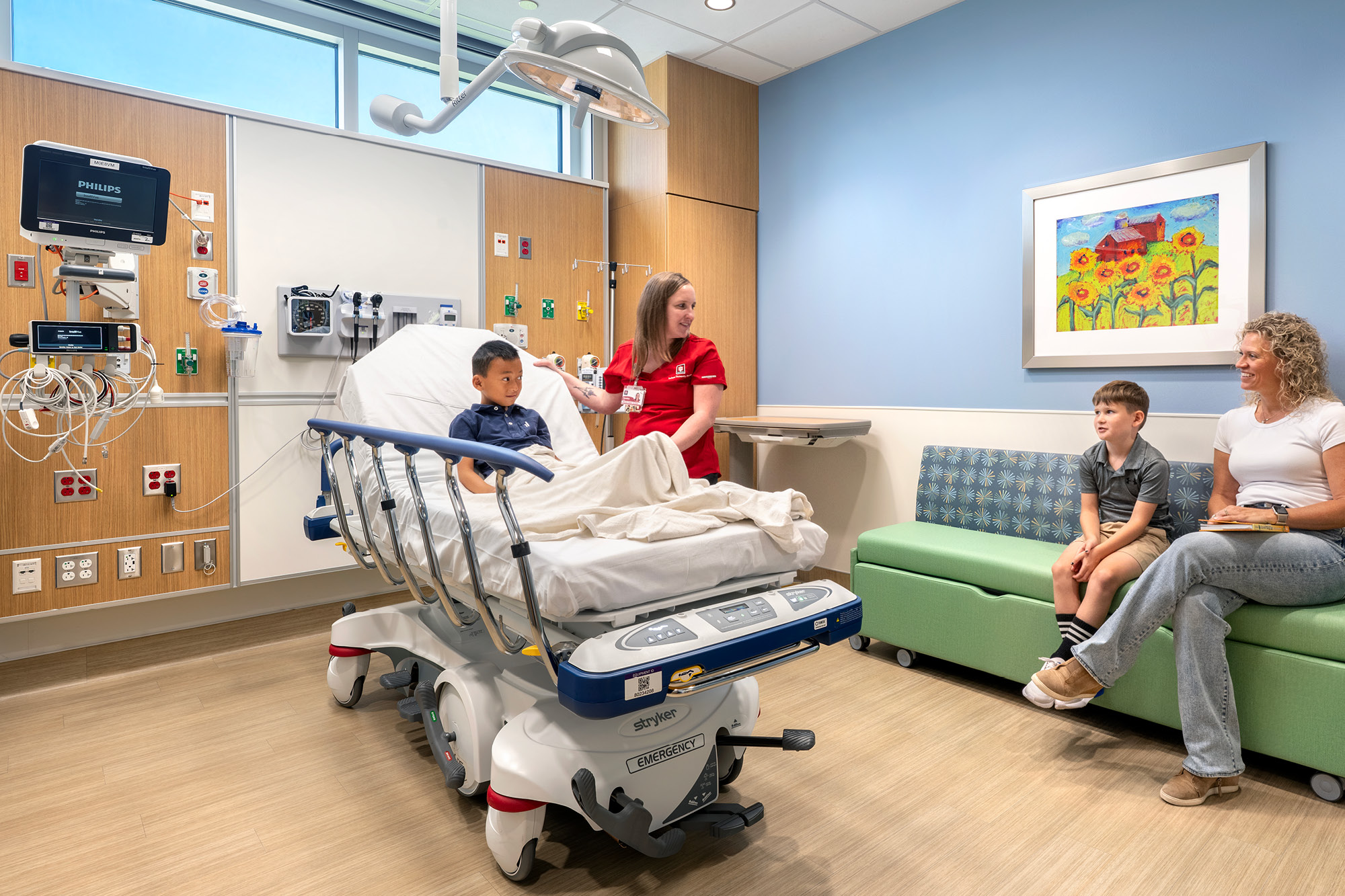
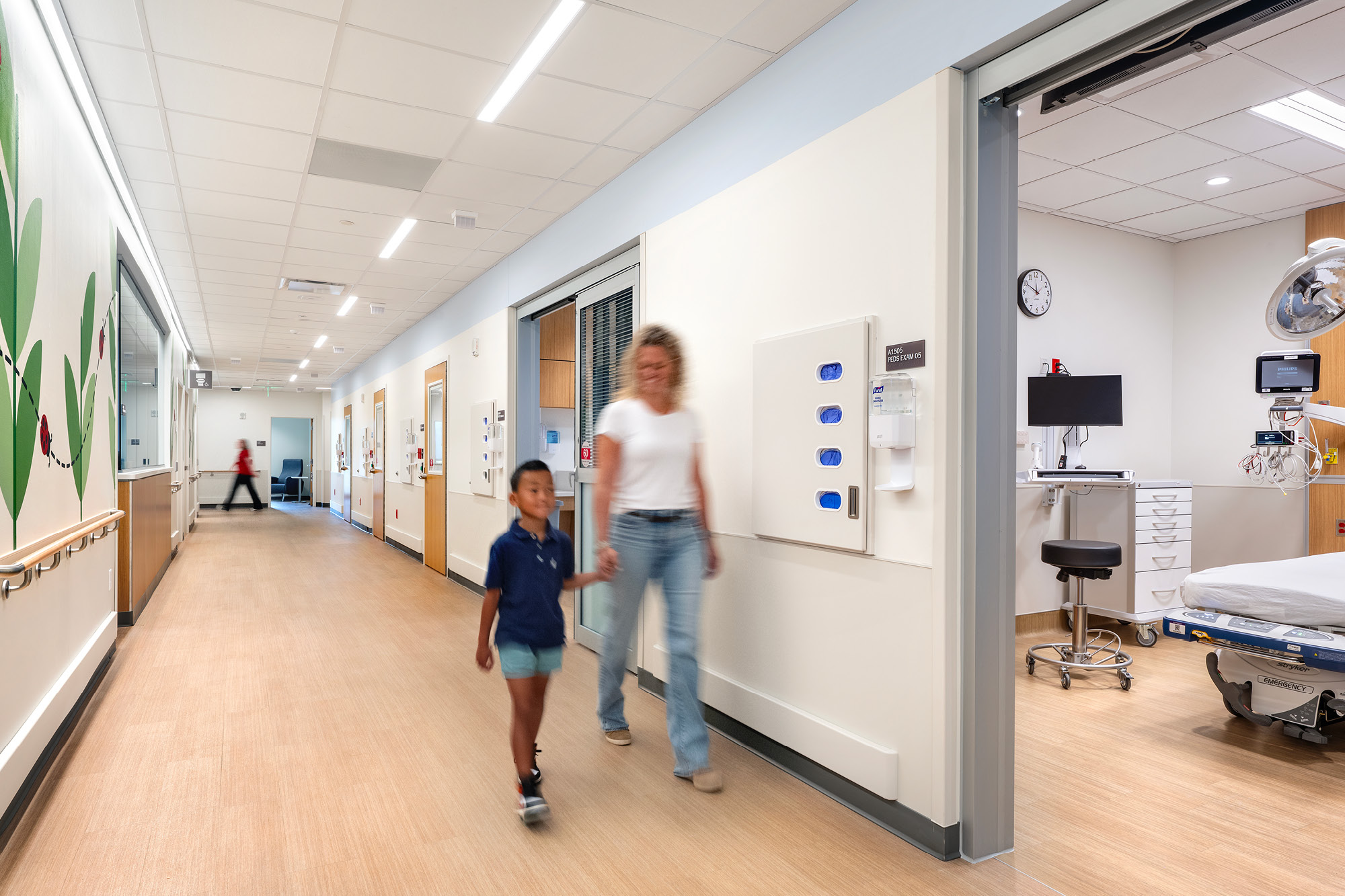
A key component of the expansion is the new unit offering Riley Children’s Health emergency medicine services. This standalone pediatric emergency unit brings child-focused emergency care closer to families in Hamilton County and surrounding areas.
This dedicated environment is staffed by clinicians who specialize in pediatric care and reflects a broader trend in expanding pediatric services—making expert care more accessible in fast-growing suburbs, not just in downtown Indianapolis.
SUPPORTING STAFF WELLNESS
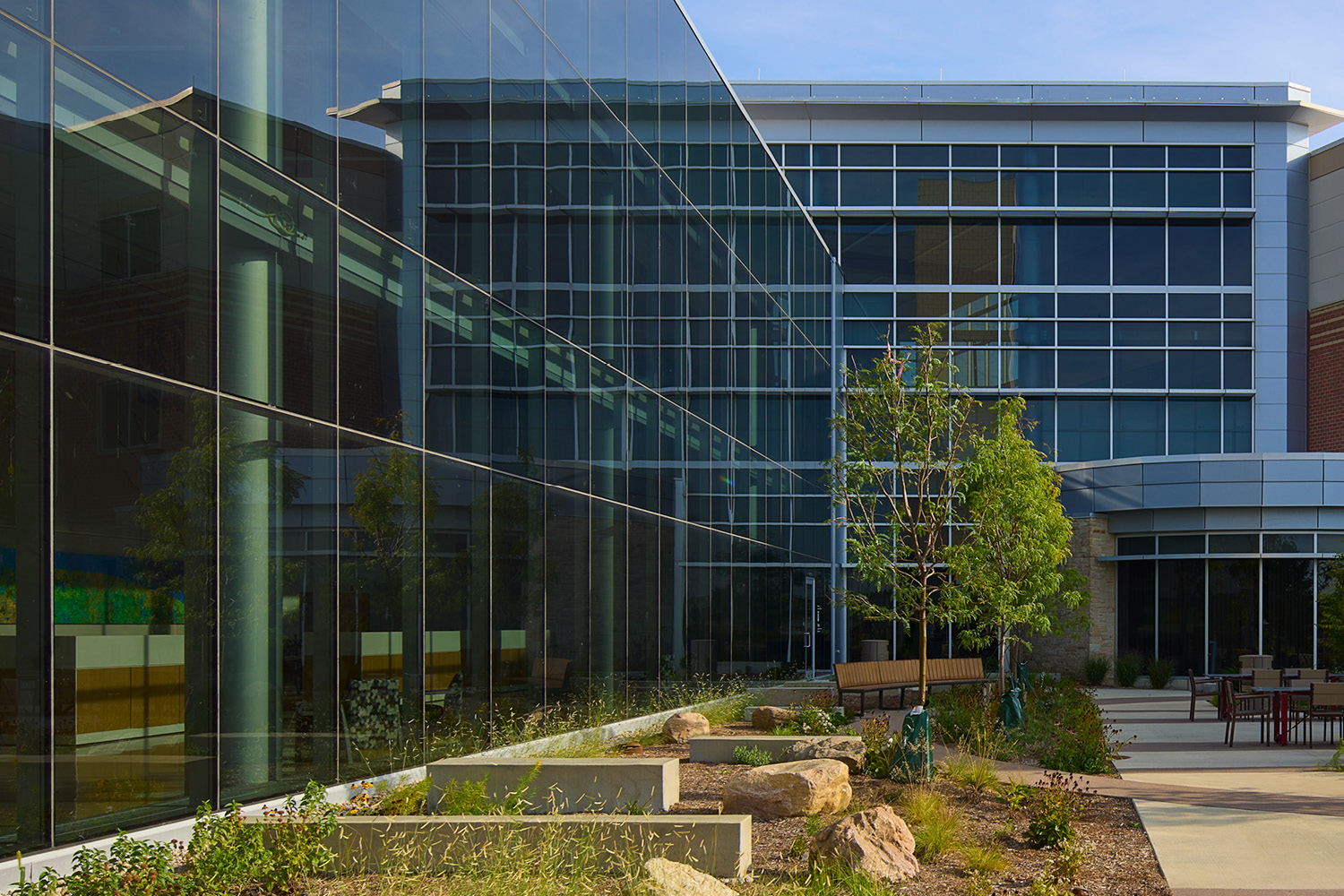
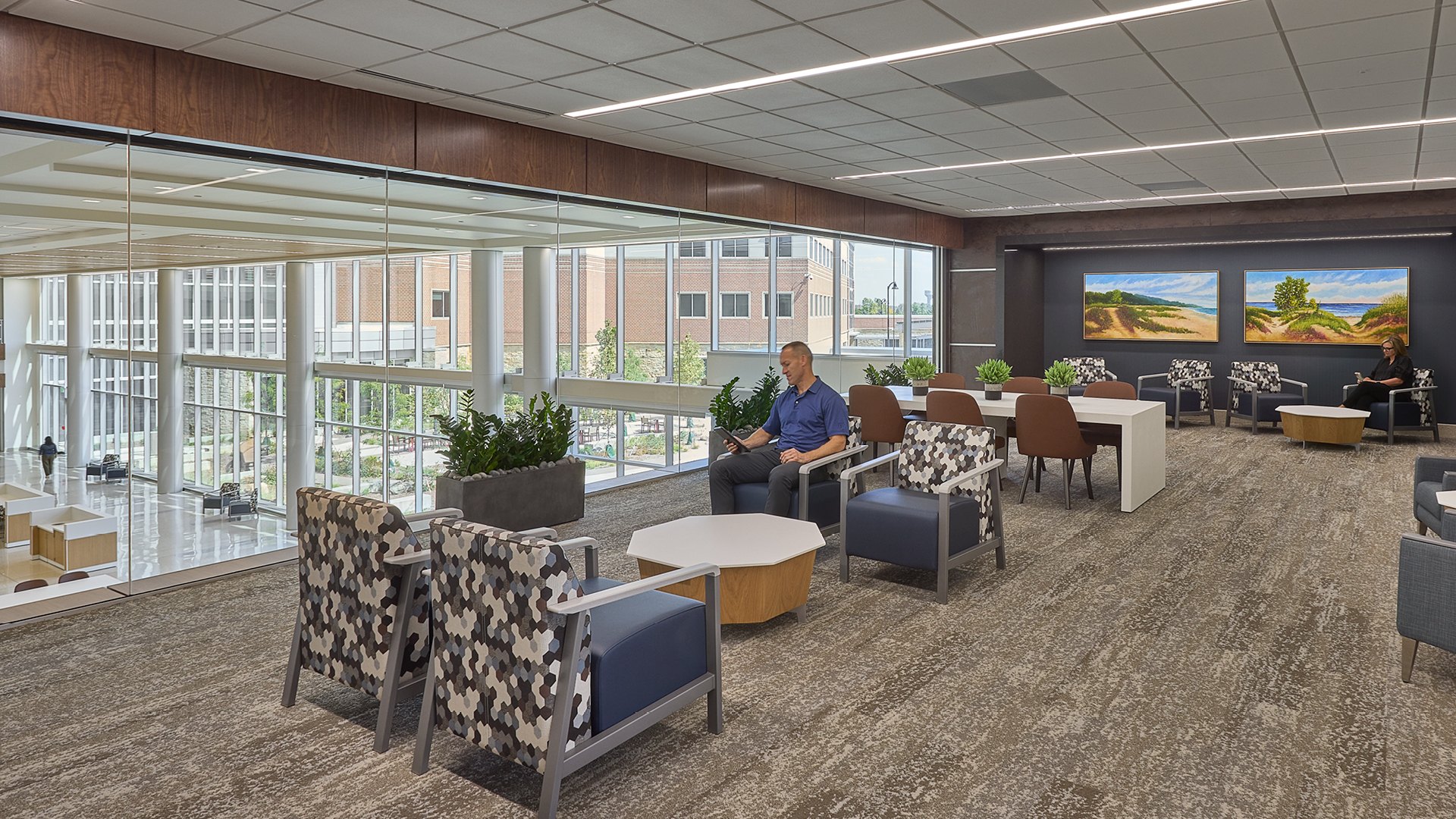
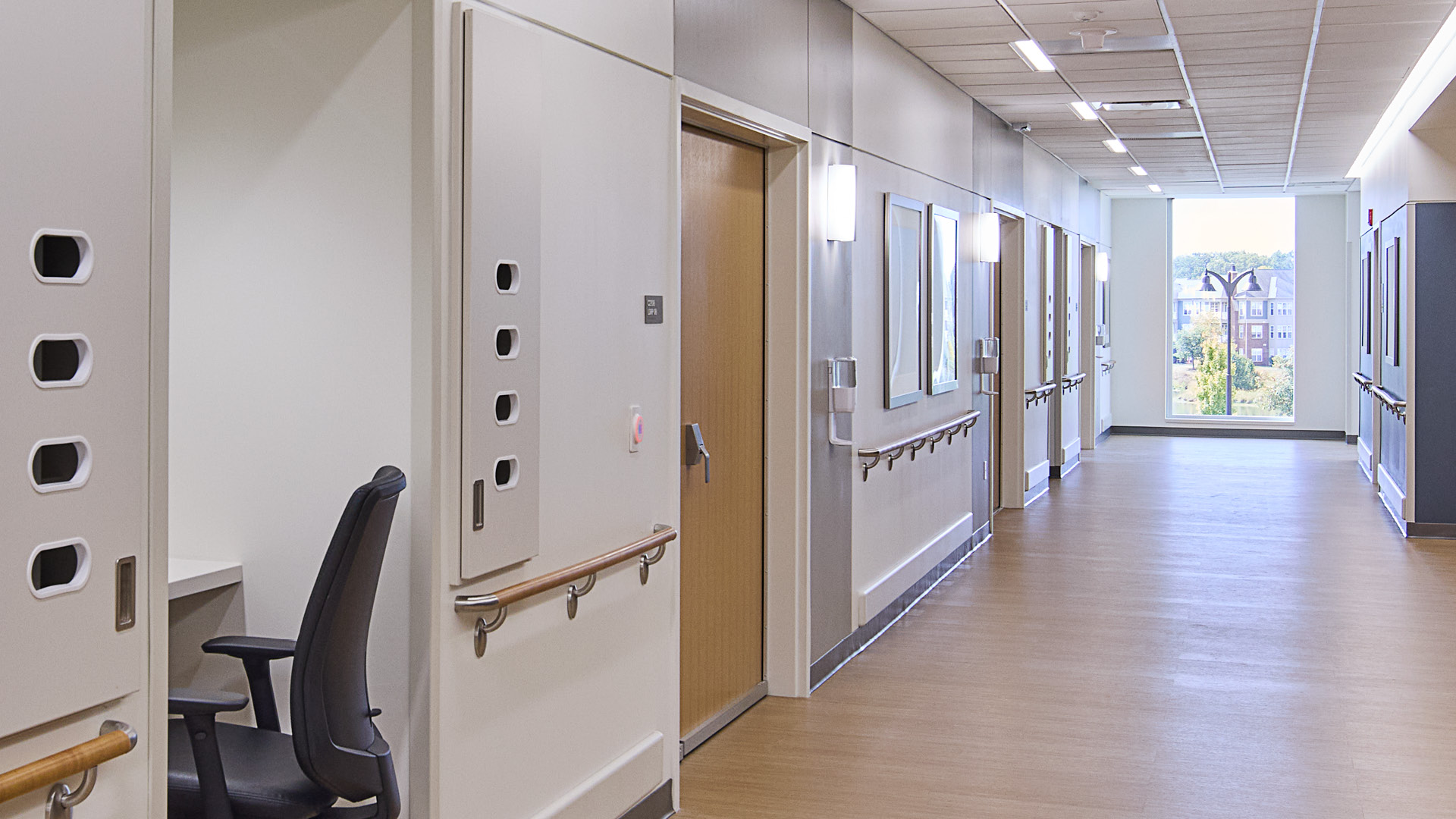
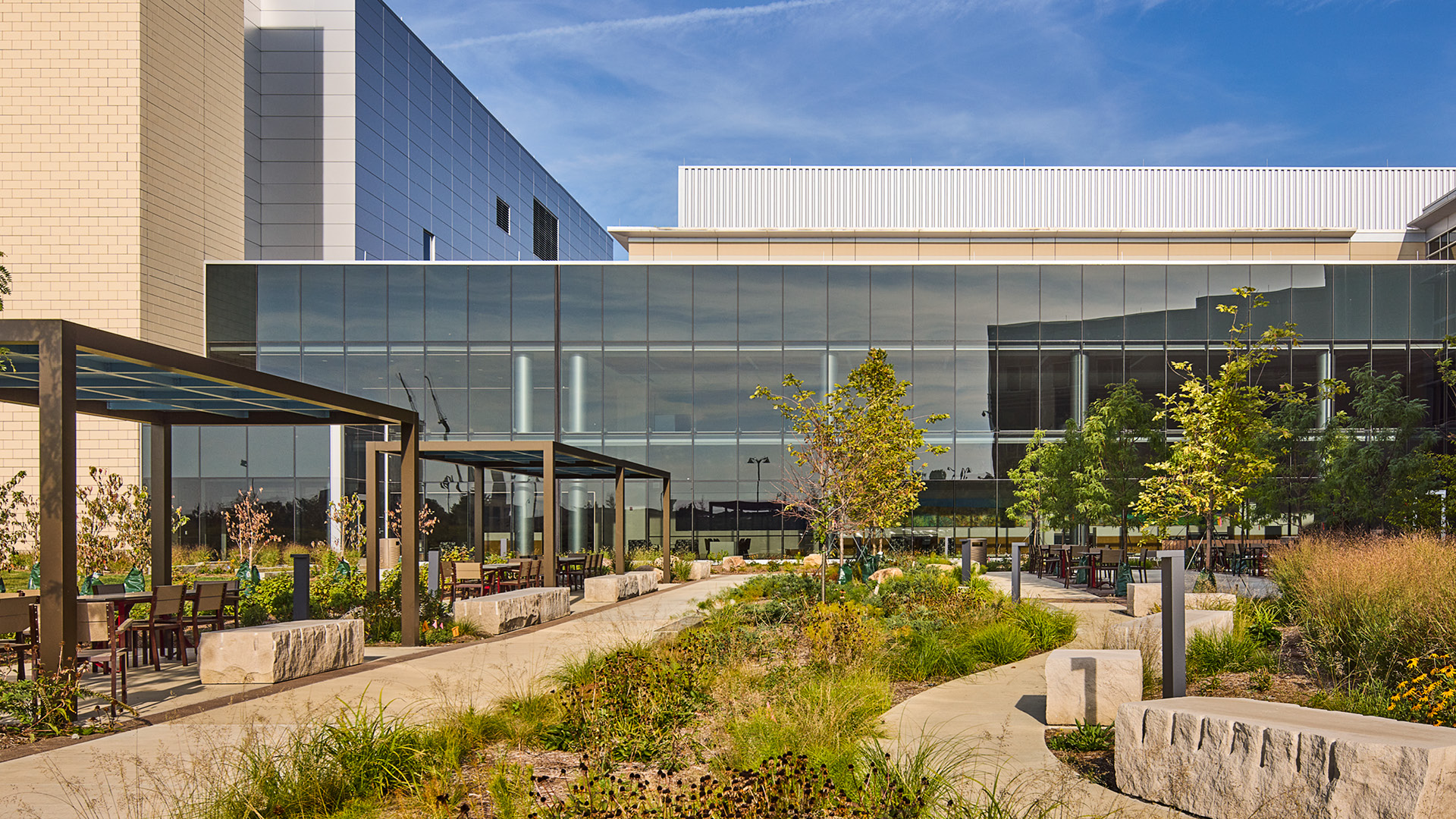
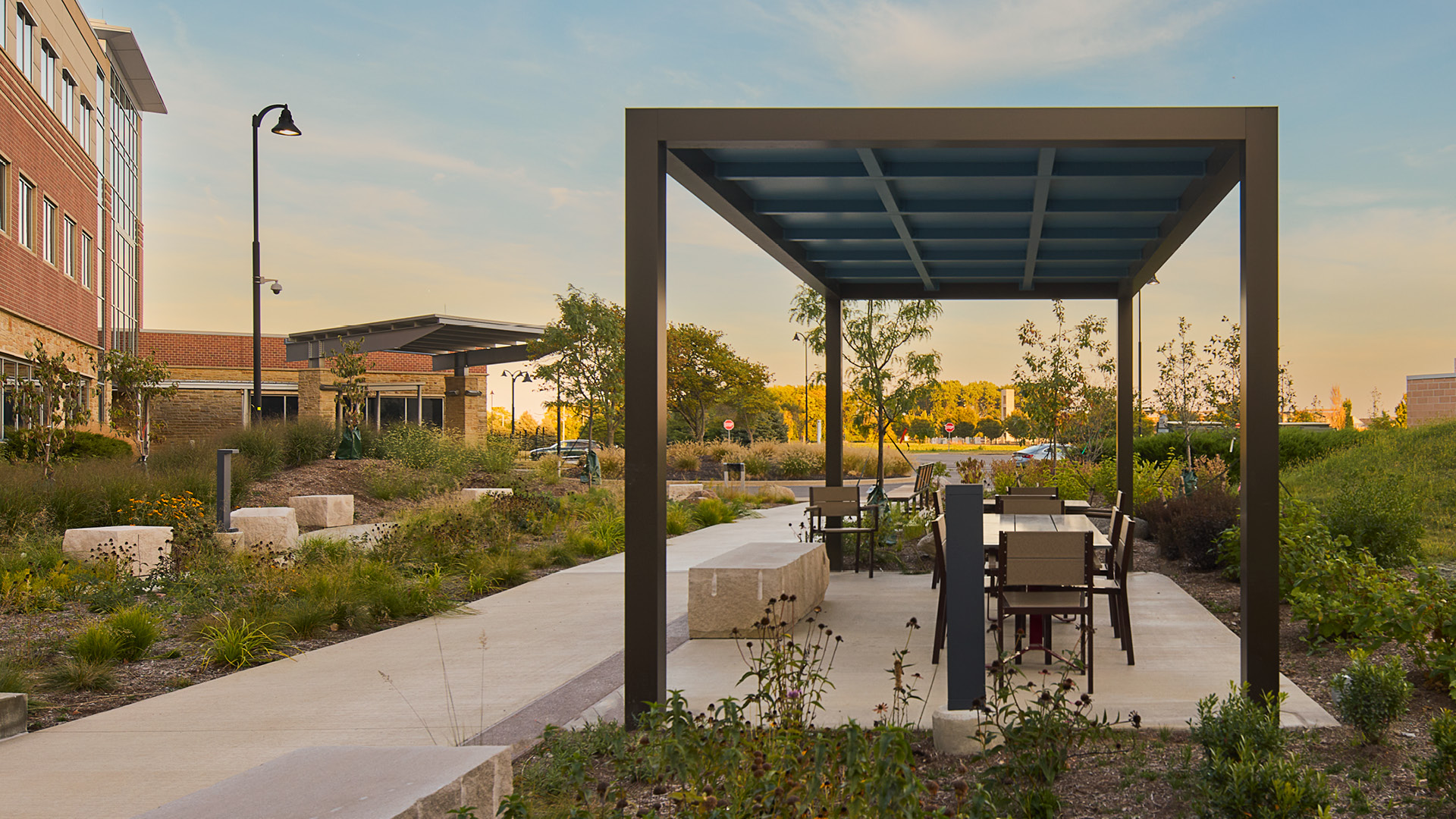
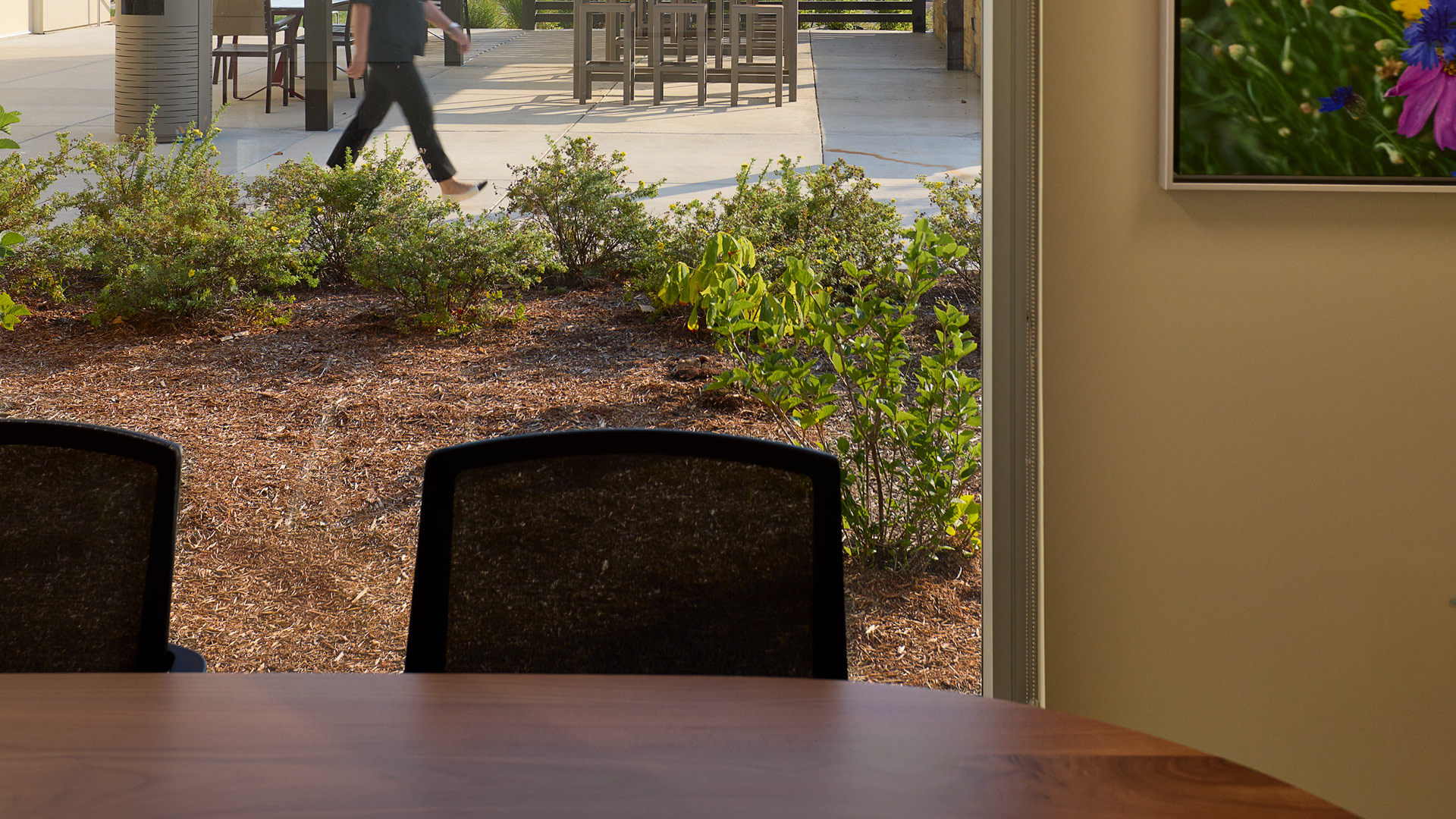
Practitioner wellbeing was emphasized alongside patient care, with natural light intentionally introduced into even the most utilitarian spaces—including back-of-house corridors and staff support areas. This thoughtful approach to daylighting reflects a belief that every member of the care team deserves access to restorative environments, no matter their role. In addition to enhancing indoor-outdoor connection, a staff-only outdoor patio and dining area was created, featuring landscaped pathways, pergolas, and ample seating. This dedicated space offers a place for respite and recharge, intentionally separated from public zones to support staff wellbeing.
SIMULATION. LISTENING. SMARTER HEALTHCARE DESIGN.
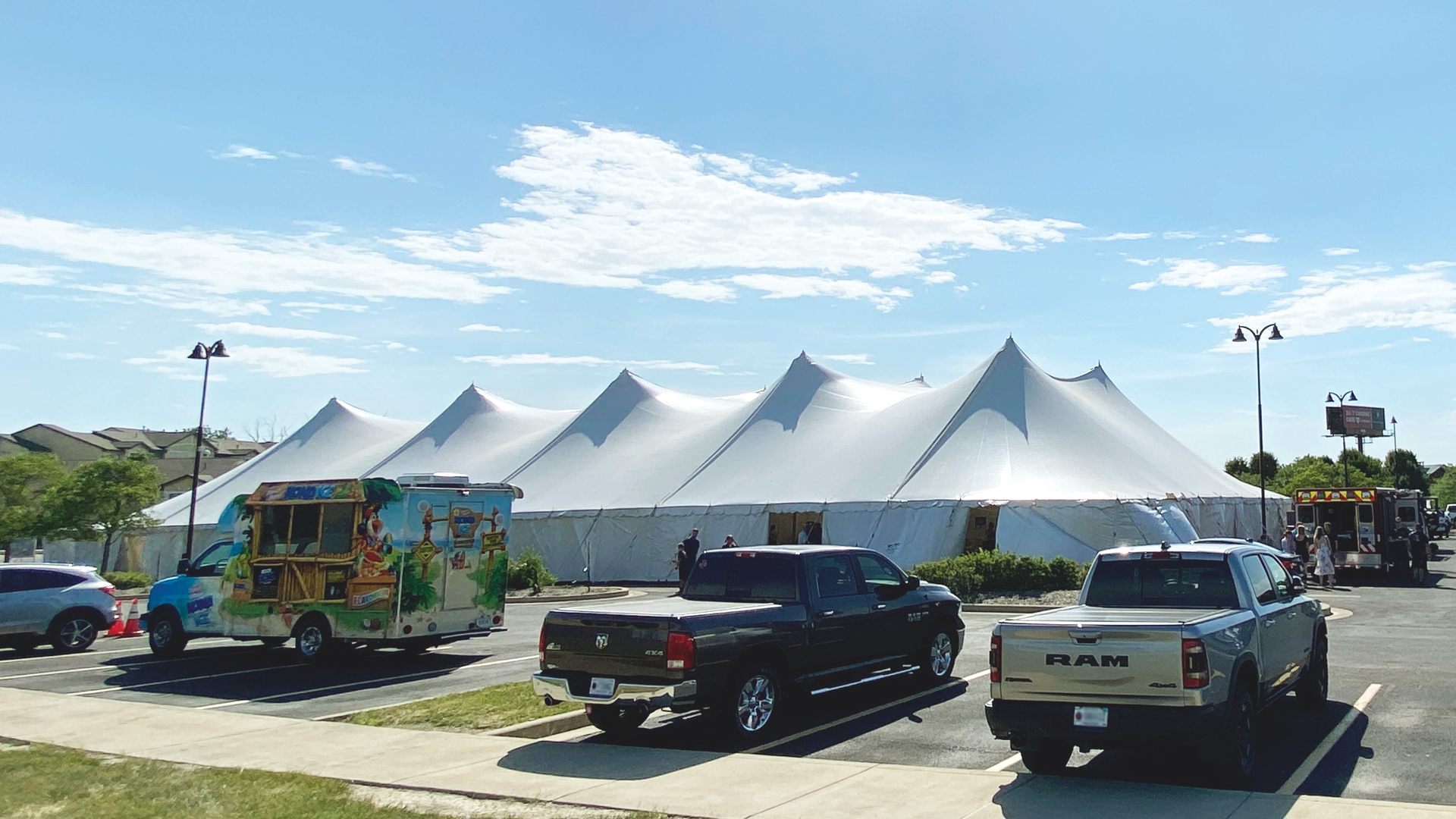
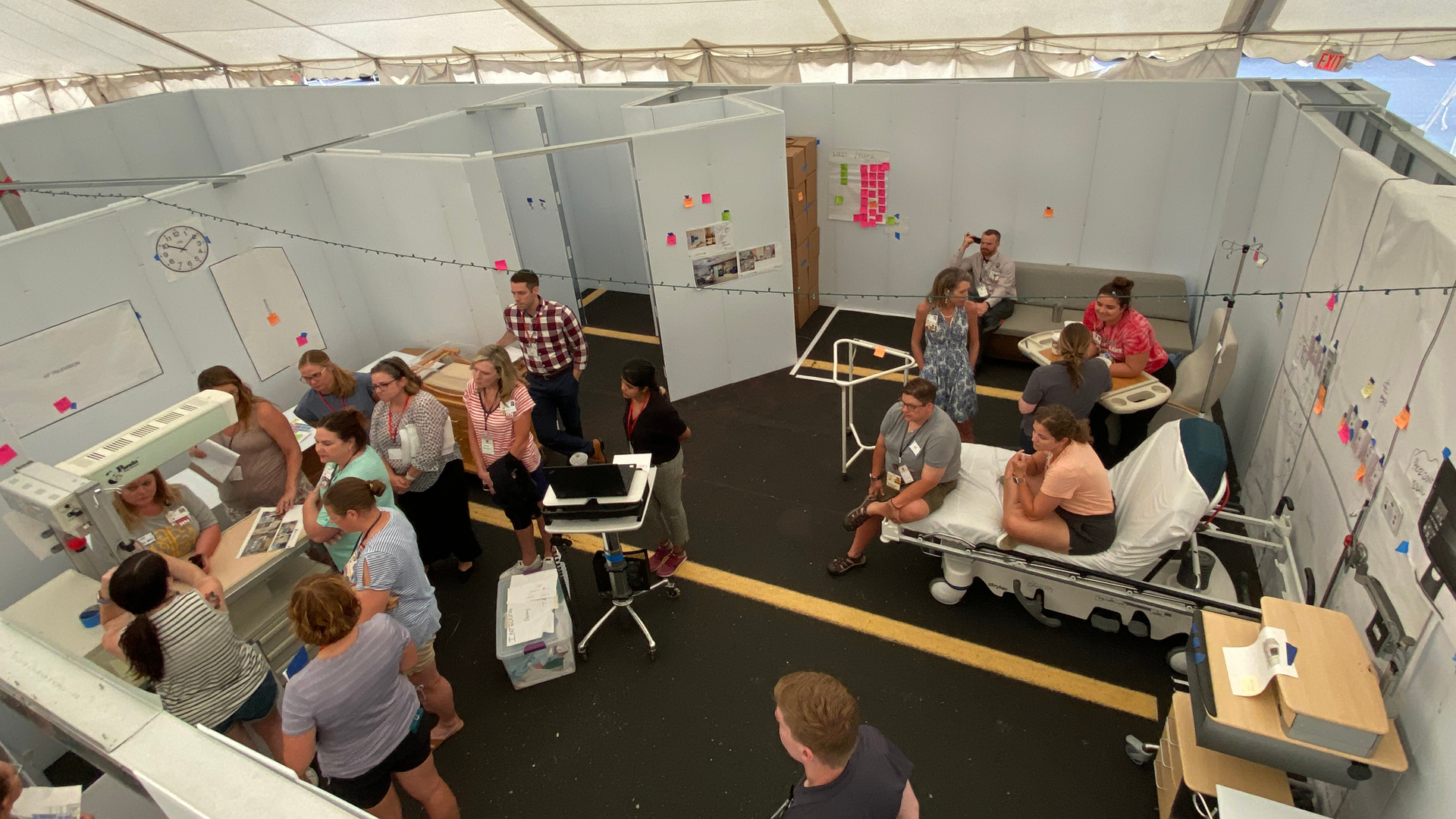
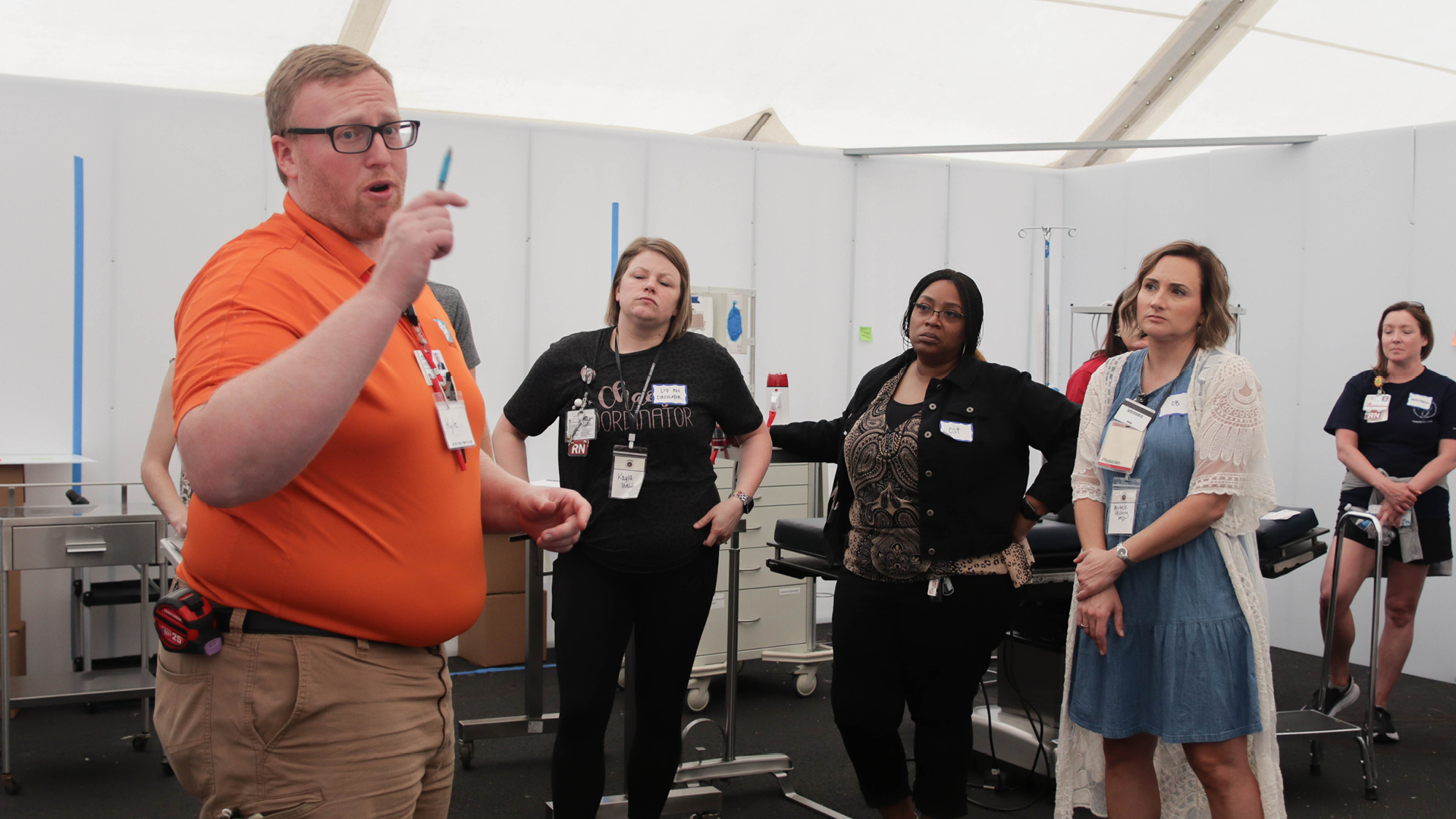
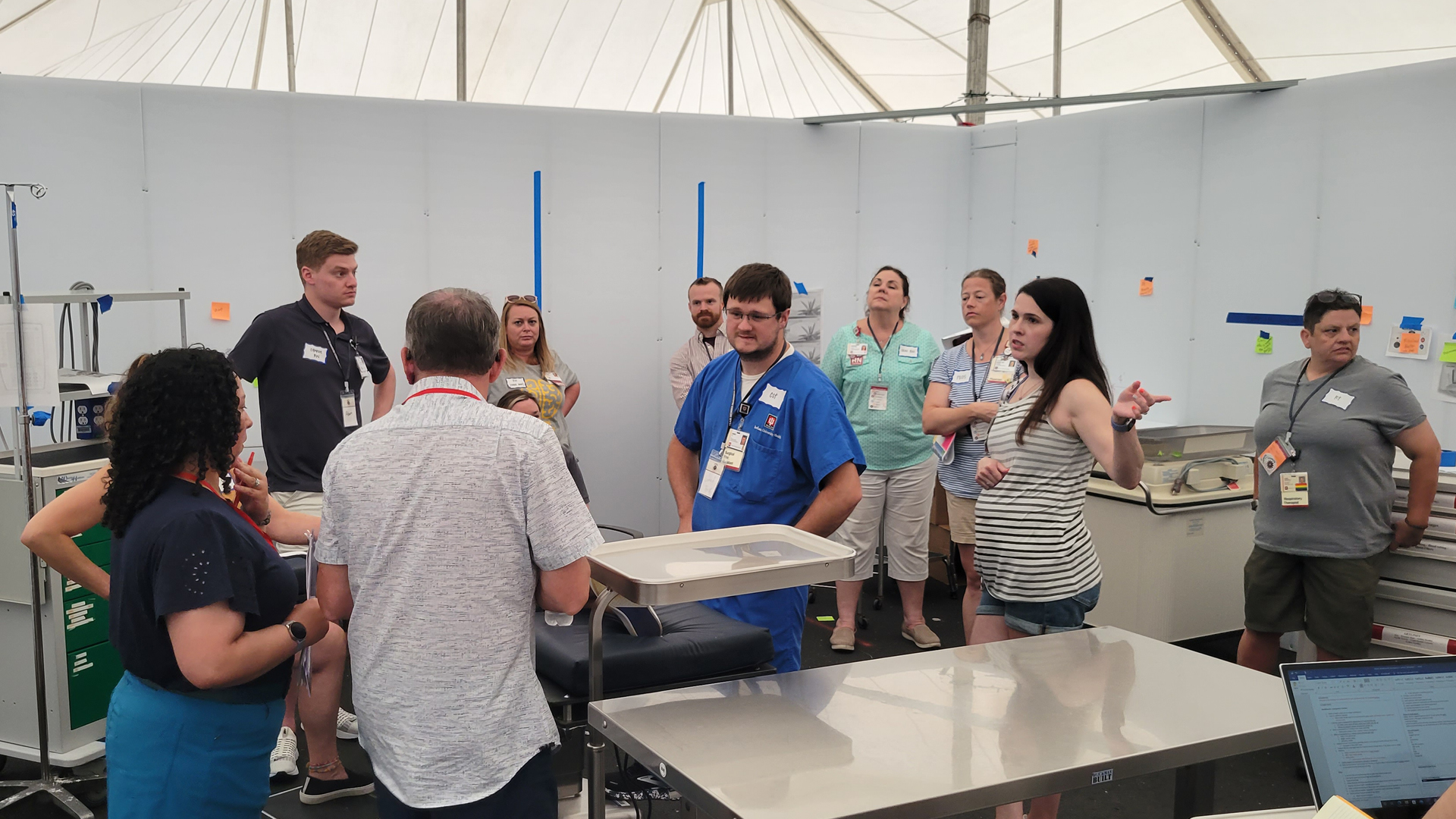
One of the project’s most distinctive design strategies was a full-scale mockup village, constructed under a 300-foot tent in the hospital parking lot using plastic paneling and cardboard medical equipment. Doctors, nurses, and hospital staff were invited to “test” life-size room layouts through real-time simulations, allowing the design and construction teams to gather direct feedback from the people who would use the spaces every day.
By gathering real feedback from the end users, we were able to refine everything from door swing patterns to casework placement. The immersive process engaged frontline staff, increased buy-in, and led to design improvements that shaped the final outcome—from circulation flow to furniture layouts. Although it required an upfront investment of time and resources, the result will be measurable ROI because the spaces are fine-tuned for optimized care.
ENGINEERING FOR EFFICIENCY AND ENDURANCE
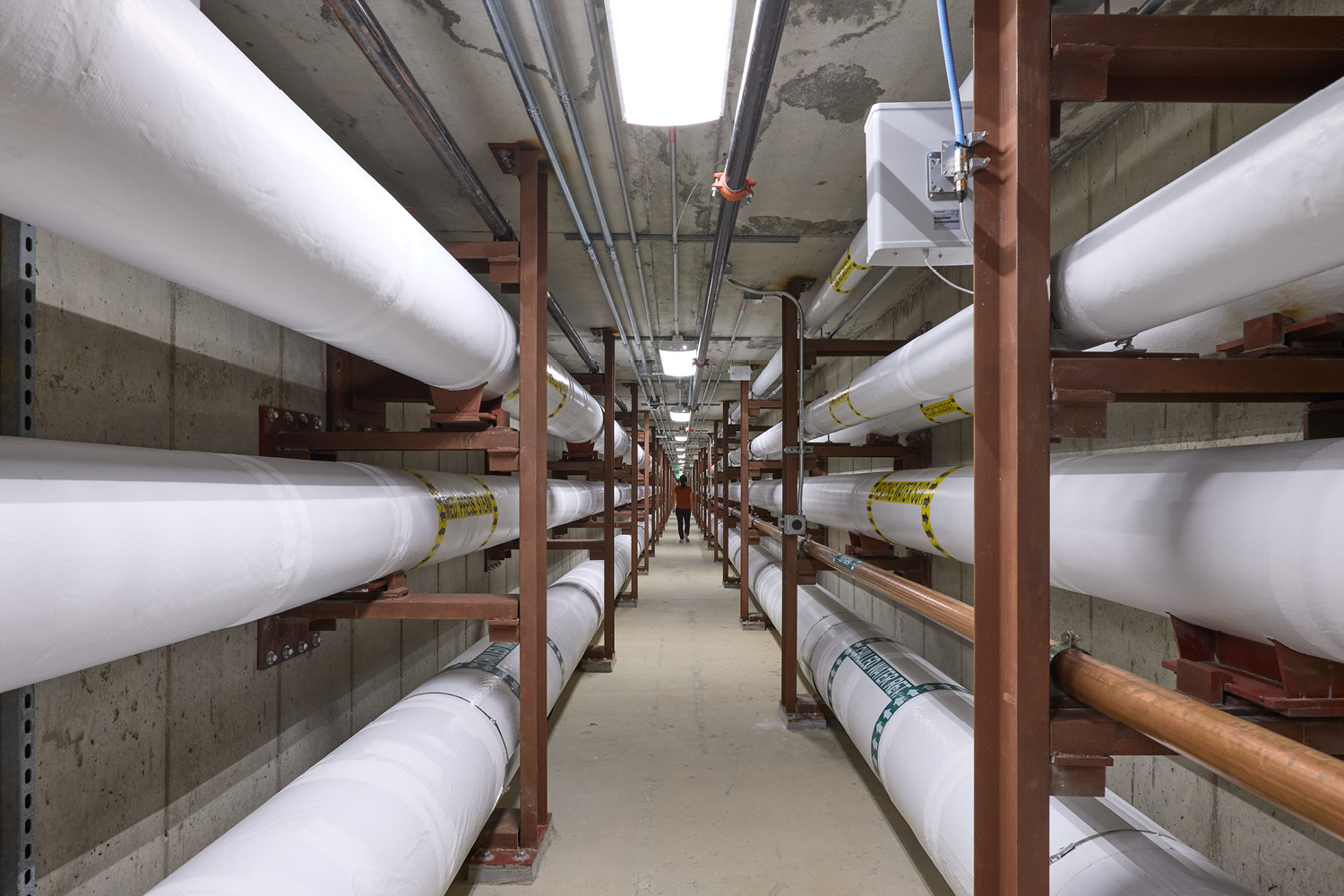
Beneath the new tower lies a 300-foot underground utility tunnel that connects the facility to the central energy plant. This critical infrastructure supports a redundant loop of chilled water, steam, and power, ensuring uninterrupted service during maintenance or emergencies. While not immediately visible, this foundational system plays a vital role in maintaining smooth hospital operations. The project is also on track for LEED Gold certification, underscoring a commitment to sustainability through improved daylighting, thoughtful materials selection, and energy-efficient systems.
INTEGRATED DELIVERY ACROSS TWELVE PROJECTS
The full scope consisted of twelve projects—including office renovations, the pediatric emergency unit, ICU rooms, imaging, and additional clinical and support service spaces. The integrated delivery model was chosen because they were all interconnected with a lot of dependencies.
The client experience was elevated through our collaborative approach across the entire project lifecycle. By minimizing hand-offs, we improved accuracy, increased responsiveness, and managed intricate details—enabling the design team to serve the client at the highest level.
“Coordinating twelve overlapping scopes across one active hospital campus wasn’t easy,” Slater admitted. “But we approached it with a high-trust, integrated delivery model that allowed us to respond in real time. And that made all the difference.”
BUILDING MORE THAN HOSPITALS: DESIGNING FOR PEOPLE AND PURPOSE
For MSKTD, this expansion represents the kind of healthcare design that makes a lasting impact—high-stakes, high-impact, and deeply rooted in community need. It’s not just about creating patient rooms; it’s about designing an ecosystem of care, where every element comes together to support meaningful outcomes for patients and providers alike.
Behind the Design invites readers into the evolving story of a project—whether it’s just beginning, actively unfolding, or fully realized. Each edition is more than a summary, it places the reader inside the process, revealing how purpose, creativity, and collaboration are the confluence that shapes meaningful spaces.
Learn more about our Healthcare projects.