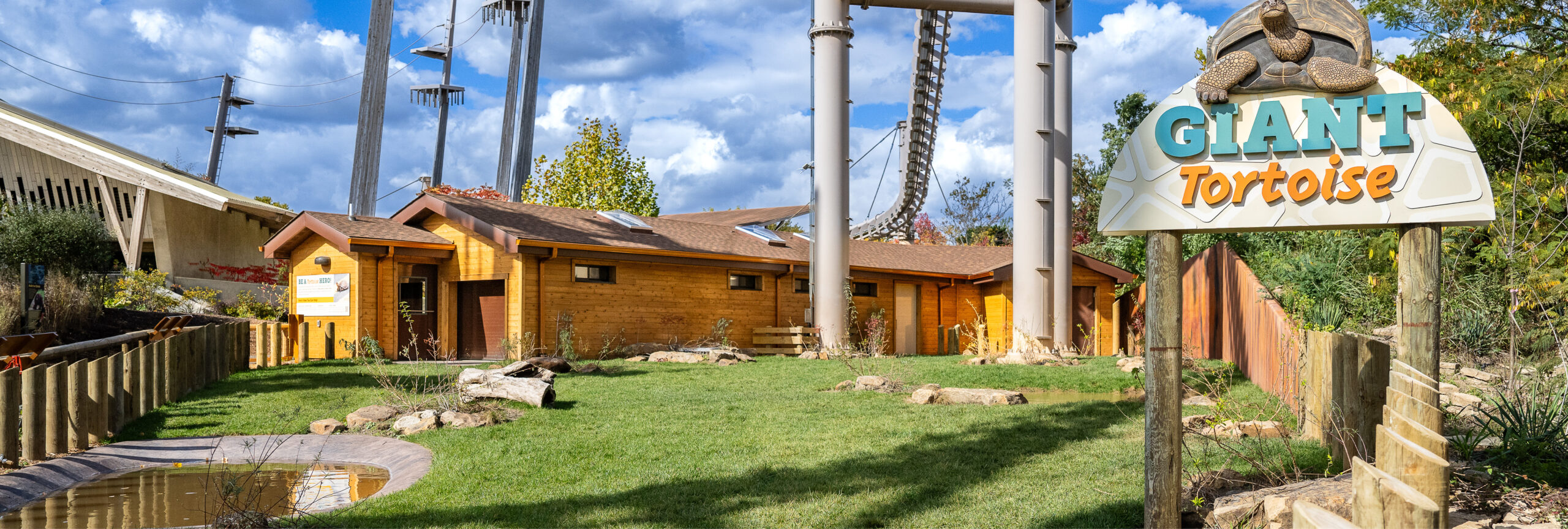
INDIANAPOLIS ZOO: GIANT TORTOISE EXHIBIT
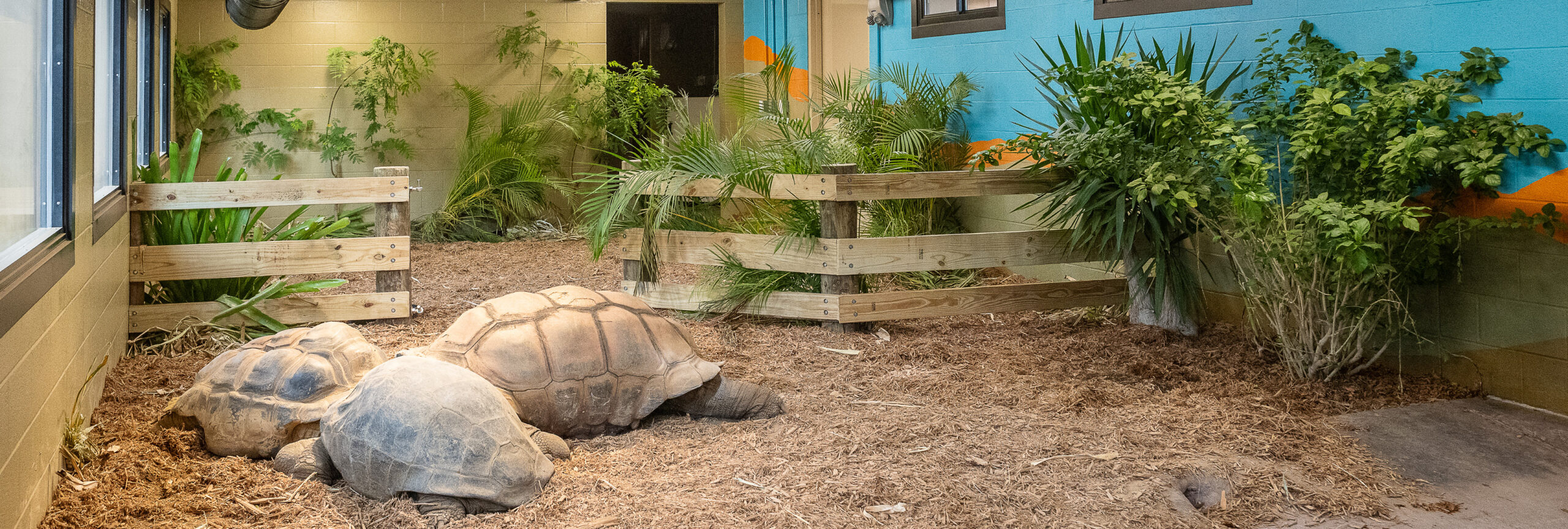
“The finished exhibit serves as one of the most visually appealing giant tortoise exhibits in the country.” – Indianapolis Zoo
BIG SHELLS, BIGGER CHALLENGES
The Indianapolis Zoo came to MSKTD & ASSOCIATES with a challenge familiar to many organizations—how do you activate an underutilized space when that space seems to resist it at every turn? Nestled between the Simon Skjodt International Orangutan Center (IOC) and the Deserts Dome, a compact, sloped site presented many constraints including:
- existing retaining walls
- underground utilities of uncertain age and location
- shallow foundations
- limited electrical conduit cover
- direction to maintain rescue and maintenance access to the aging overhead Skyline ride.
For zoo professionals, this scenario will sound familiar, aging infrastructure meets ambitious programming. Budget realities collide with animal welfare imperatives. And somewhere in that collision, you also need to create an experience that delights visitors, enriches animal lives and justifies the investment. The Giant Tortoise Exhibit is a perfect example of how creative solutions overcome limitations to create unforgettable experiences.
FROM CONSTRAINTS TO CLARITY
Our approach began with what couldn’t change—AZA standards and species-specific husbandry requirements for Aldabra giant tortoises. These are established non-negotiable parameters for habitat dimensions, and included critical lighting, temperature and humidity aspects for the indoor habitat. The tortoises needed UVA exposure to regulate circadian rhythms, maintain activity levels and encourage breeding behaviors. UVB is also critical—for production of the vitamin D3 needed to facilitate the calcium absorption for shell and bone health and maintain normal activity levels—a requirement that quickly eliminated the Zoo’s initial greenhouse concept when the specialized glass proved financially unfeasible. Rather than view this as a setback, we saw it as a clarifying moment. The project pivoted mid-design from greenhouse to roofed structure, a significant shift that actually opened new possibilities for an indoor-outdoor experience.
THE TECHNICAL REALITY
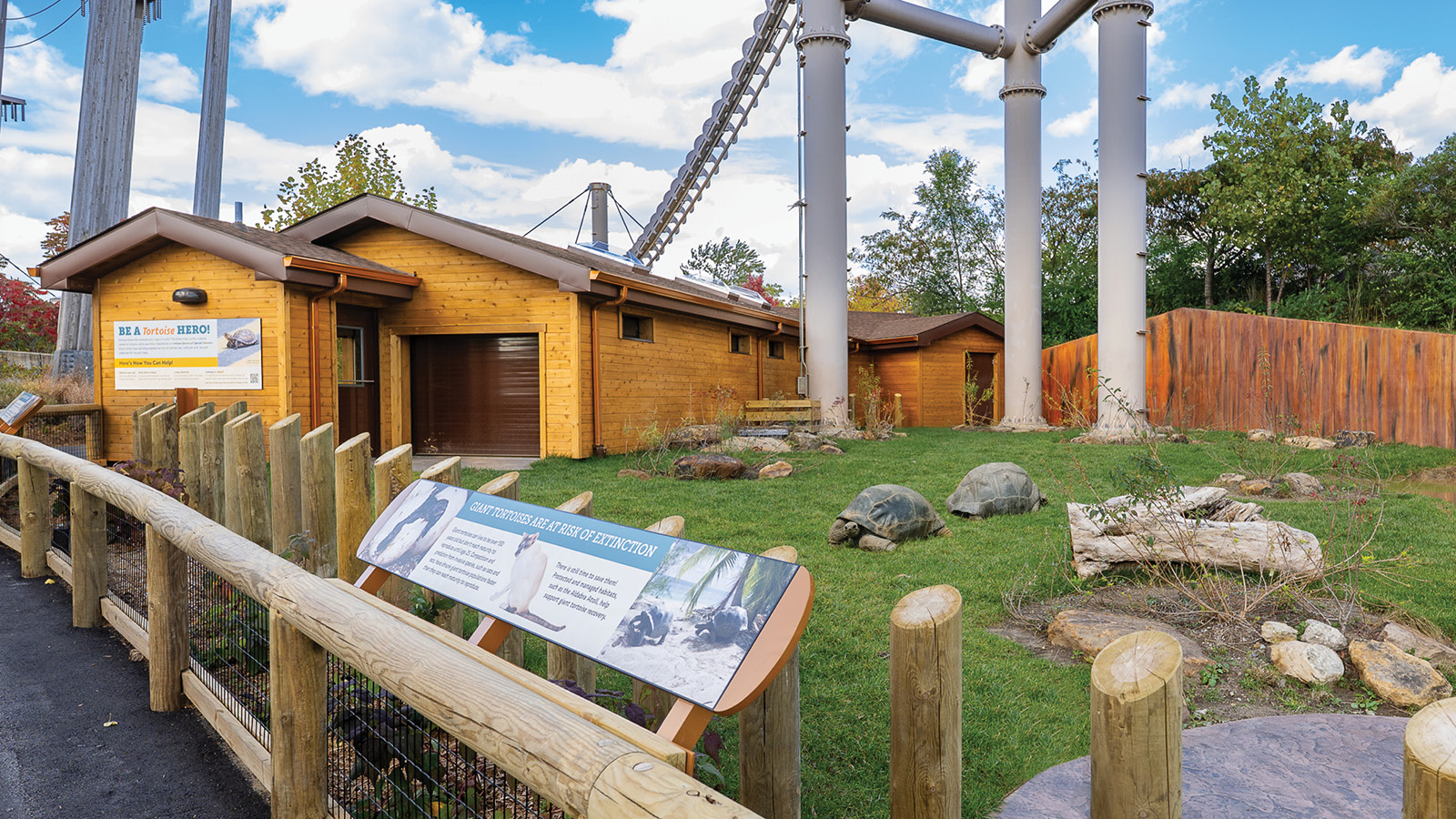
Working within the site’s constraints demanded both expertise and precision. The retaining wall on one side, the existing visitor walk on another, and the Skyline access corridor defined the exhibit’s footprint with little room for negotiation, with side grade additionally impacted by a planted berm and landscape wall. Below grade, shallow foundations and existing utilities turned every grade change into a careful verification exercise. We coordinated closely with the Zoo, the surveyor, and the construction management team to map known conditions and confirm suspected obstacles. On a site this complex, team flexibility proved essential to success.
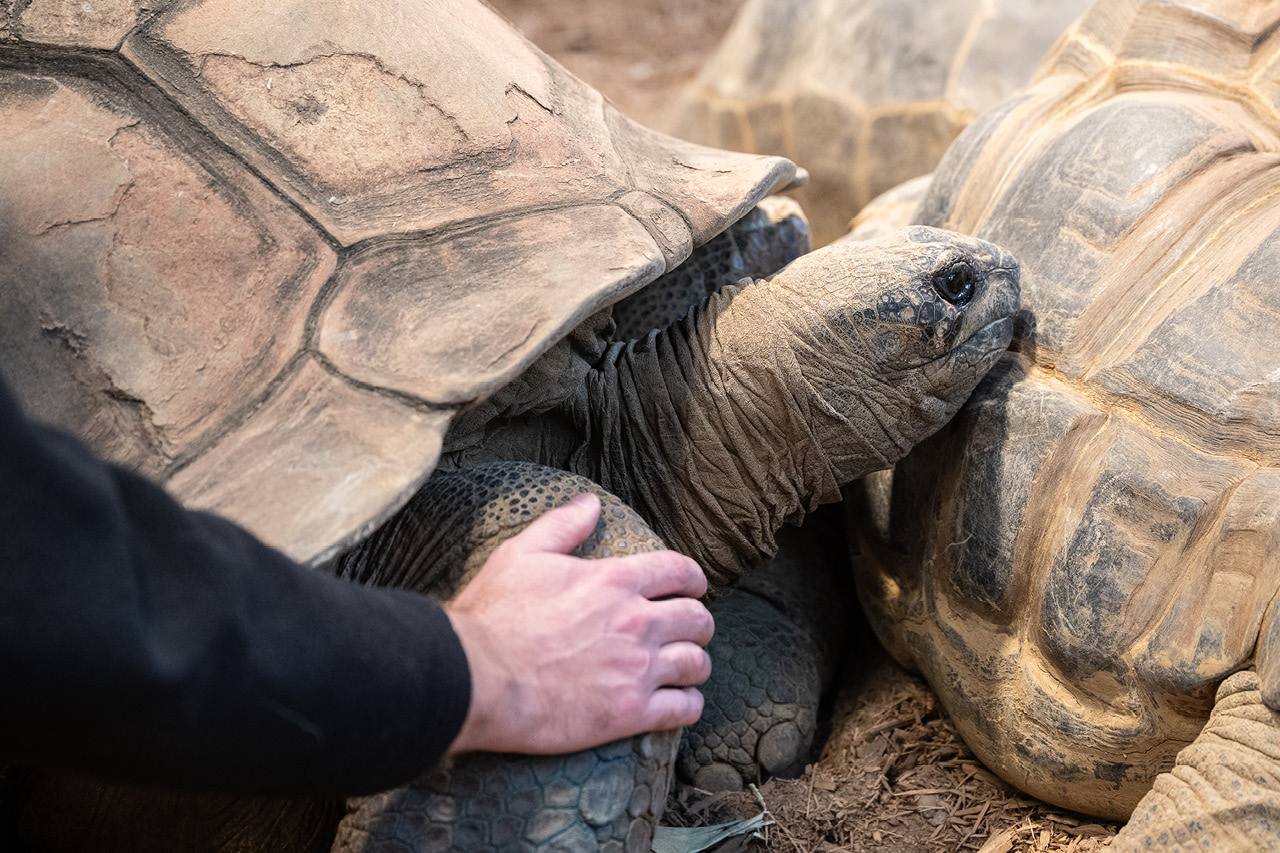
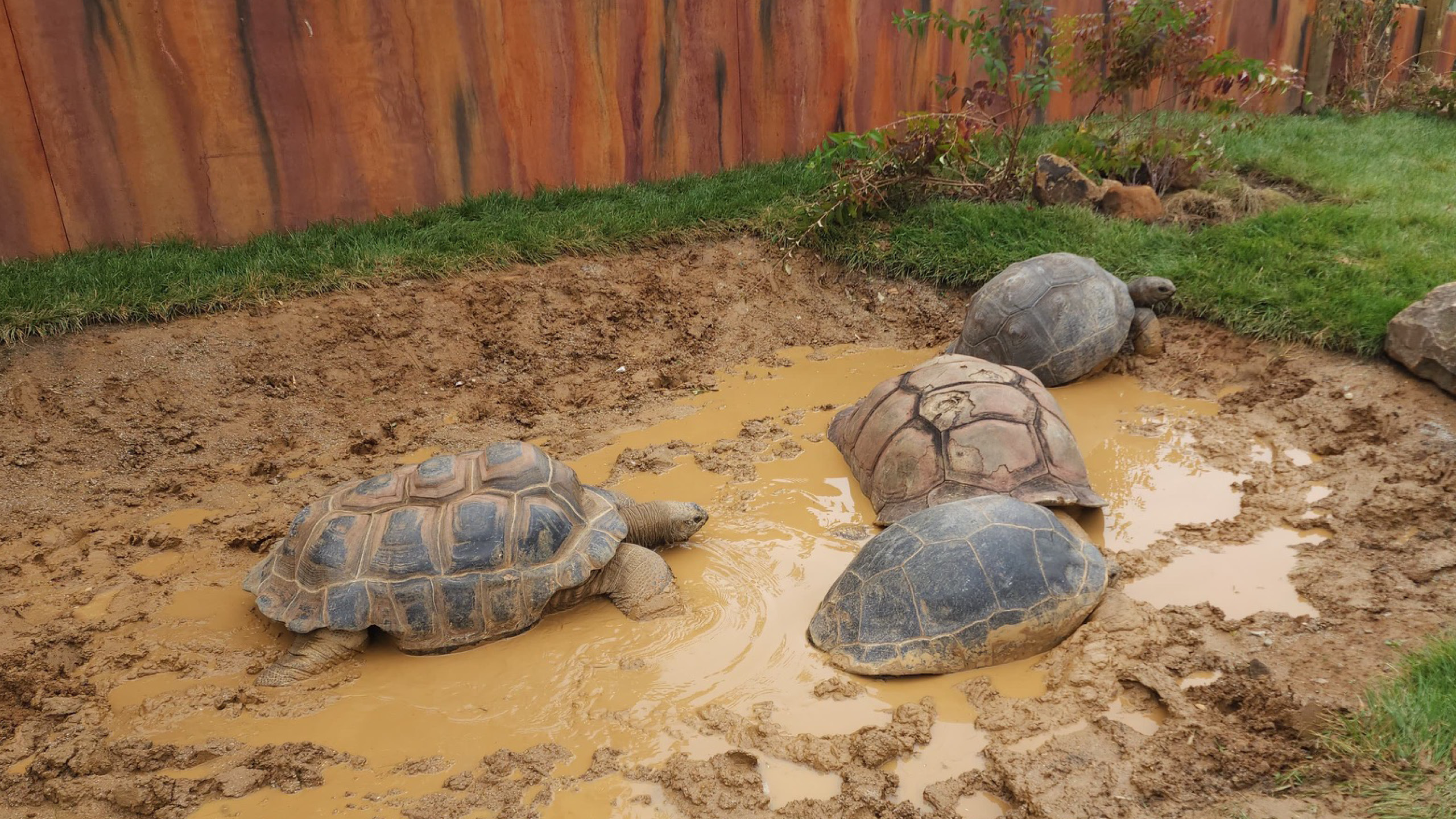 Photo courtesy of Indianapolis Zoo
A YEAR-ROUND HOME
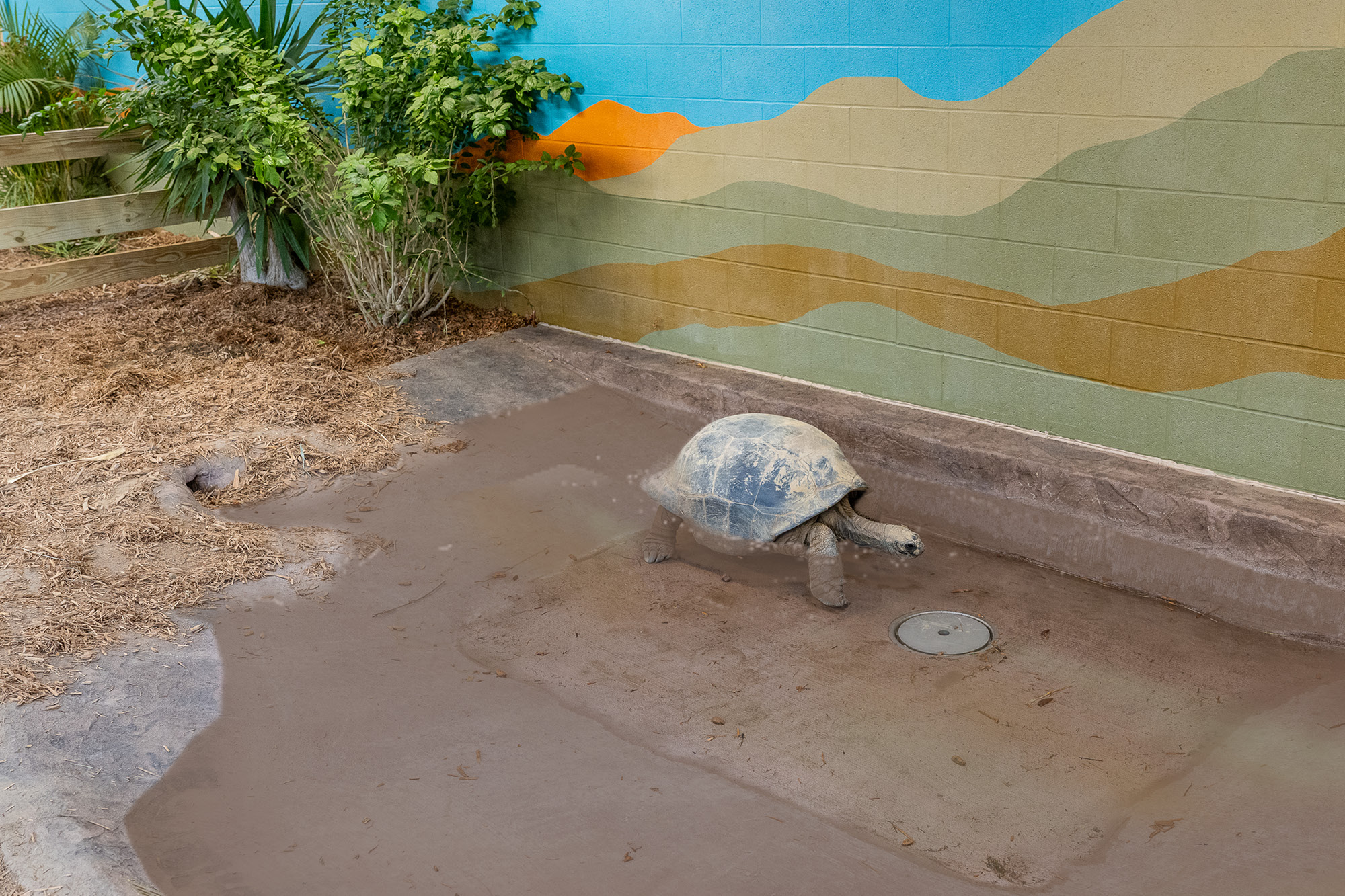
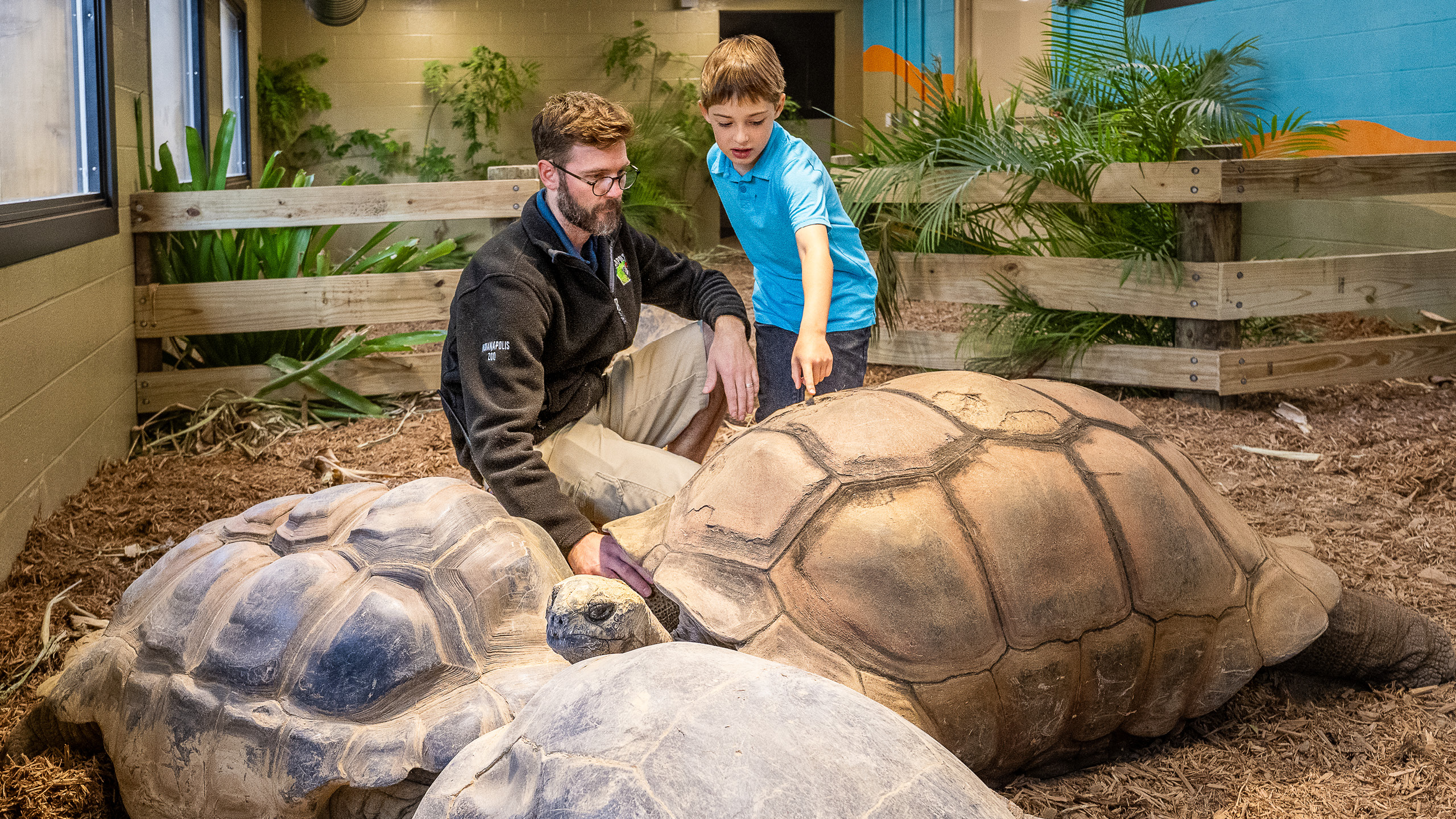
The resulting exhibit encompasses both indoor and outdoor habitats designed for Indiana’s four-season reality. Outdoor spaces feature shaded lawn areas and a mud wallow that has become decidedly popular with the five resident giant tortoises—Little Dot, AJ, Morla, Maud and Lyn St. James.
Interior and exterior pools with hard bottoms and integrated drainage systems serve both hygiene and enrichment needs. The winter holding space includes an isolation pen for egg-laying periods. A dedicated mechanical room services the pools and nesting area, tucked strategically to maximize animal space while maintaining serviceability for keepers.
DESIGNING FOR CONNECTION
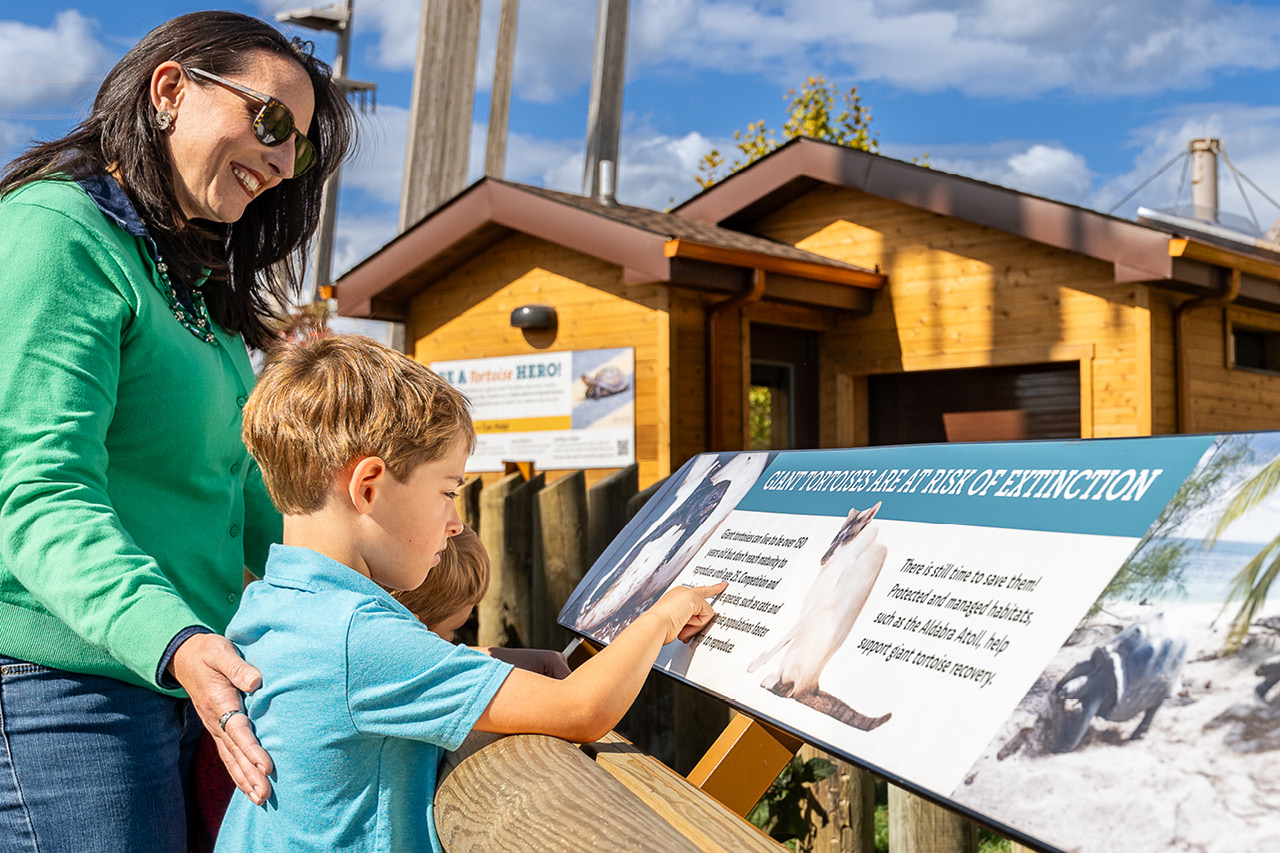
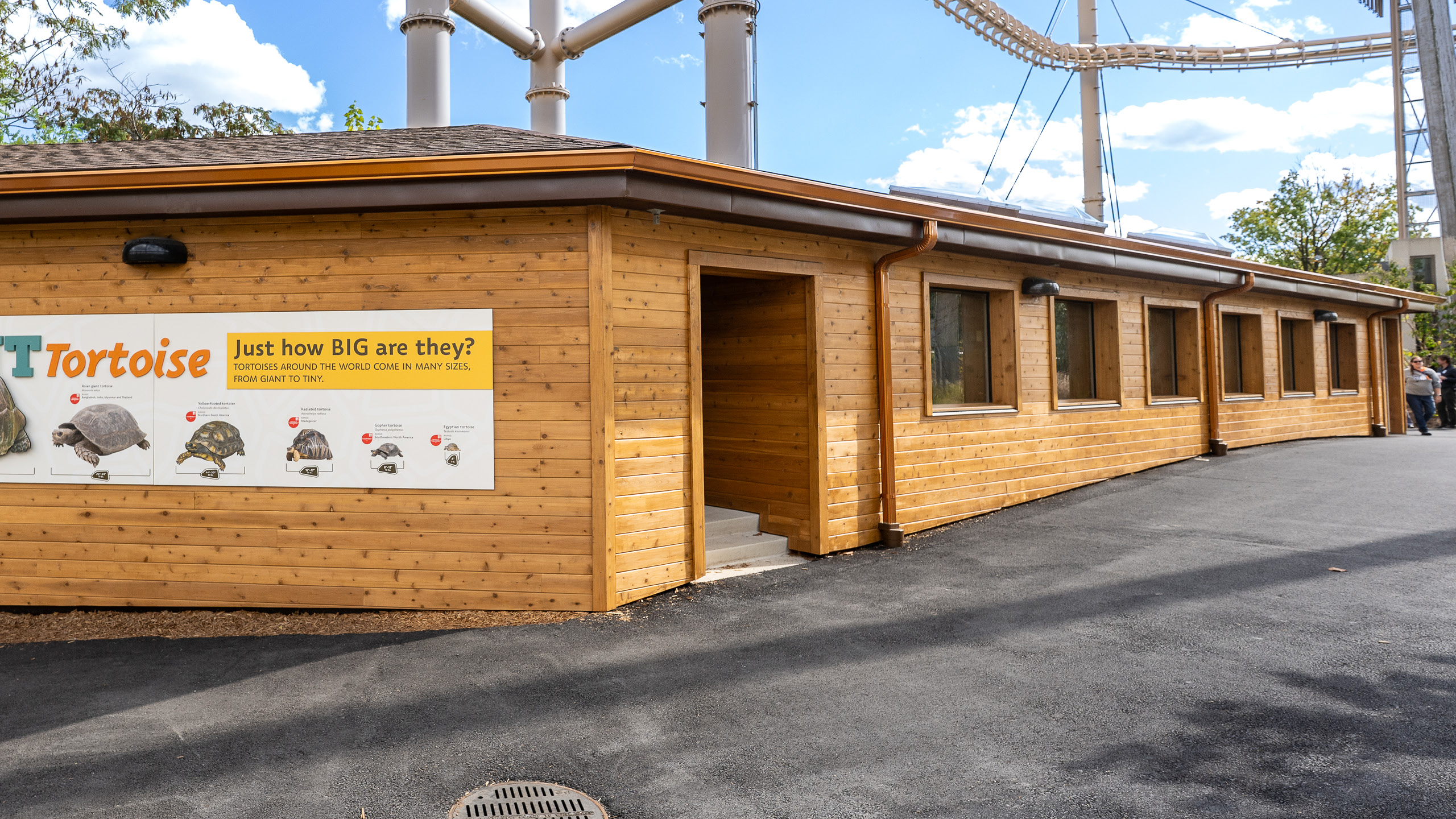
Guest experience shaped every decision, but never at the expense of animal welfare. The designated walkway offers a series of windows into the indoor habitat, maximizing climate control for cold-weather housing when the weather is outside tortoise comfort range. Outdoor viewing along the adjacent path positions guests to observe natural behaviors in the yard.
We worked with the Zoo to integrate premium experience opportunities that generate revenue while deepening visitor connection to the animals. These weren’t afterthoughts bolted onto the design; they were woven into the design from the beginning.
A PARTNERSHIP BUILT ON STRENGTHS
Budget realities shaped the project scope from the outset. MSKTD maintained oversight of the entire project, focusing resources on the architectural and engineering framework—the structural and systems infrastructure that would serve both animals and visitors, even as it threaded through the complexities of the Zoo’s existing property. The Indianapolis Zoo leveraged their existing in-house capacity and deep expertise with their animals and audience, taking on signage design, interior exhibit theming, provided indoor habitat substrates, irrigation for interior and exterior plantings, exterior yard turf and all plantings. This division of responsibilities allowed the project to stay within budget while ensuring each aspect received specialized attention.
A SUCCESSFUL COLLABORATION
The Giant Tortoise Exhibit opened within budget, transforming a challenging in-between space into a four-season destination that serves tortoises, keepers and guests, all with consideration. These types of projects demonstrate the need for more than technical competency. It demonstrates the elevated experience of collaborating with an A/E firm who can drive the whole project—coordinating MEP, civil engineering, landscaping, and construction across multiple internal and external teams. It demonstrates the importance for how a team should respond to adaptability when having to pivot mid-project and circumstances demand it. And it demonstrates the importance of hiring expertise with the AZA compliance knowledge to design with authority within the parameters that protect the animals and support the zoo’s best interest while elevating the guest experience.
Many architecture firms can point to successful projects when conditions align perfectly. MSKTD’s strength lies in delivering practical, creative outcomes even when conditions are anything but perfect—when the site fights you, when the budget tightens, when the scope shifts, when the underground utilities surprise you at the worst possible moment. It’s not only project delivery that builds trust, it’s how the team responds under these complex conditions.
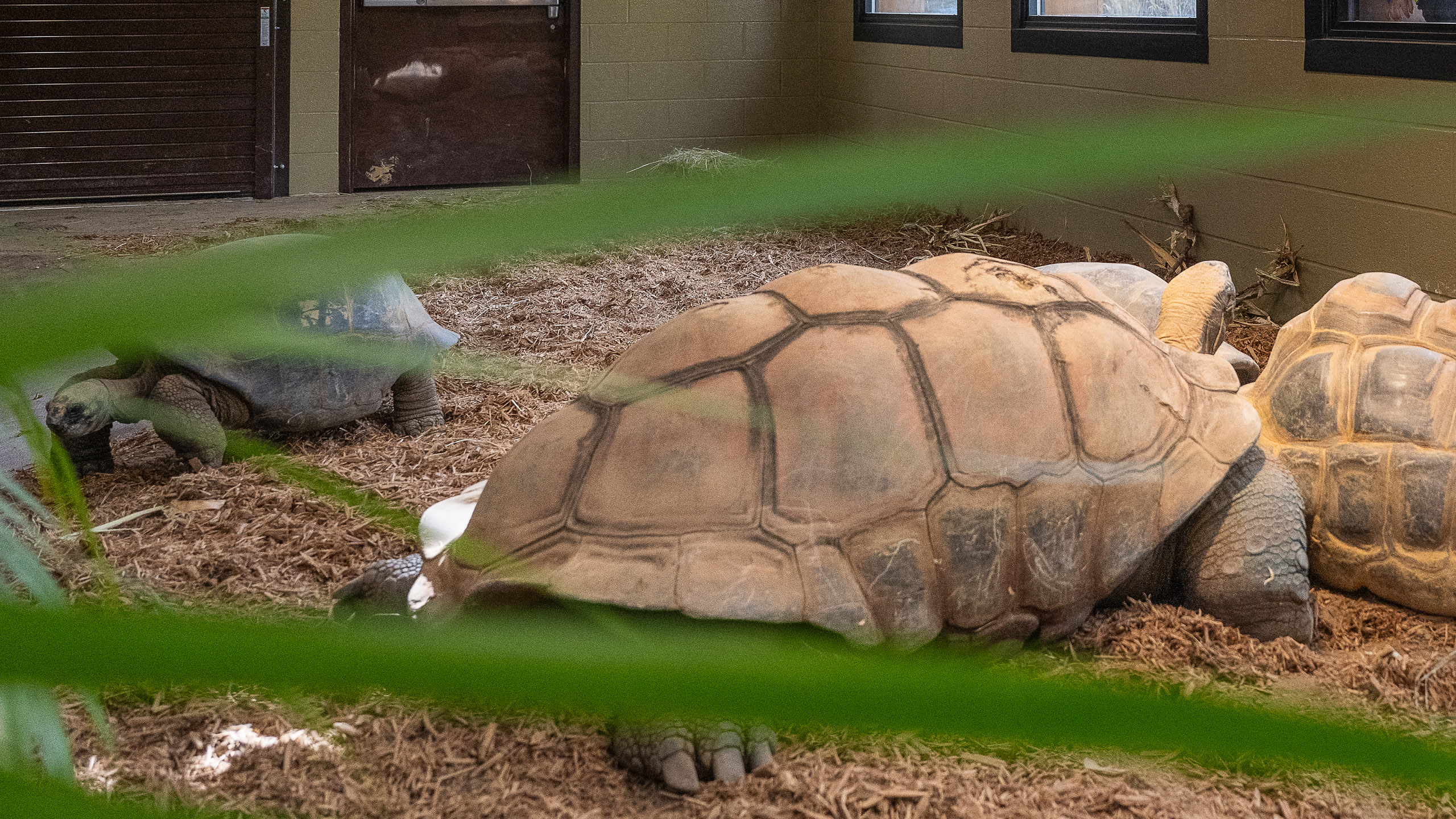
Every time Indianapolis Zoo visitors pause at those viewing windows to watch Little Dot settle into the mud wallow or see Morla lumber across the outdoor yard, they’re experiencing what happens when constraints become creative fuel. They’re seeing the vision for a compact, complicated sight brought to life. And somewhere, there is another zoo professional who sees their own underutilized space and wonders what might be possible.
“The plush and diverse nature of the outdoor space, as well as the functional and inviting indoor viewing areas, are satisfying knowing a centrally located space that was underutilized was revitalized to shine and reflect the excitement of the new exhibit.” – Indianapolis Zoo
PROJECT TEAM
Owner: Indianapolis Zoo
Architecture, Zoo Planning: MSKTD & ASSOCIATES
Concept, Indoor Exhibit Theme, All Habitat Plantings: Indianapolis Zoo
Interior Design: MSKTD and Indianapolis Zoo
Structural Engineering: JPS Consulting Engineers
MEP Engineering: MSKTD
Civil Engineering: MSKTD
Project Management/Construction Administration: MSKTD
Construction: Turner Construction